Author: Douglas Ireland

  • The Vultures Circle: Defending the NHS from the Tech Bros

    Soundtrack to this post.

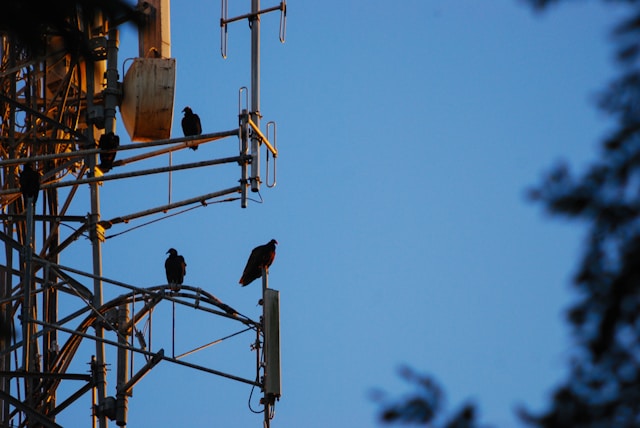
    The vultures are circling our infrastructure, both physical and digital. Photo by Sam Cherone on Unsplash.

    I am writing this from a hospital bed in Paisley. For over two weeks, I have been a guest of the state. My treatment, my meals, and my recovery are being powered by a system built on a simple, radical principle: that human life has an intrinsic value which cannot be calculated on a balance sheet.

    The NHS is the closest thing we have to a sacred institution. It is socialism in practice. And because of that, it is hated by the most powerful people on Earth.

    Across the Atlantic, Donald Trump is back in power, emboldened by a coterie of Silicon Valley “tech bros” and venture capitalists. These are men who view the state not as a protector, but as an obstacle. To them, the NHS is not a triumph of civilisation; it is an “inefficiency” waiting to be disrupted. It is a market they haven’t been allowed to corner yet.

    Make no mistake, they are coming for it.

    This is not a conspiracy theory. We have the receipts. Donald Trump has previously stated on camera that in any trade deal with the UK, “everything is on the table,” including the NHS. His trade negotiators have consistently pushed for “full market access,” which is diplomatic code for dismantling the price controls that stop US pharmaceutical giants from charging us American prices for life saving drugs. They want to break the NHS model because it is bad for their shareholders.

    And the tech invasion has already begun. Look at Peter Thiel, the billionaire co-founder of Palantir and a vocal Trump supporter. He has described the British public’s affection for the NHS as “Stockholm Syndrome” and claimed the system “makes people sick.” Yet despite his contempt for the institution, his company was awarded a massive contract to run the “Federated Data Platform” for the NHS in England. They are not waiting at the gates anymore. They are already inside the server room.

    The danger isn’t just that they want to sell us insurance. It is that they want to mine us for data. To the tech oligarchs backing the US administration, the NHS is just a massive, unexploited database. They see millions of health records, genetic profiles, and histories that they can feed into their proprietary AI models to generate profit.

    They want to turn patients into products.

    This is where my physical reality here on the ward meets my digital reality on the server.

    I have spent the last few months aggressively moving my digital life onto my own VPS. It is a modest setup: 8GB of RAM, an 80GB SSD, and a 1TB storage box. But it is mine.

    When I run my own cloud, I am removing myself from the jurisdiction of the Silicon Valley data brokers. I am refusing to let Google or Microsoft scrape my emails, track my location, or feed my photos into their algorithms. I am reclaiming my digital sovereignty from the very same people who are eyeing up the NHS for parts.

    There is an ideological line between defending socialised healthcare and self-hosting your data. Both are acts of resistance against a worldview that says everything, your health, your memories, your location, your blood, must be for sale.

    A protester wearing a face mask holds up a large hand-painted banner outside the UK Parliament. The banner reads "Thank the NHS... STOP THEM PRIVATISING IT!" in large black and white lettering.
    A reminder that the fight for the NHS is happening on the streets as well as in the wards. Image by Alan Shearman. Licensed under CC BY 2.0.

    The Counter-Offensive

    It is easy to feel helpless when you are up against billionaires and governments, but resignation is just another form of privatisation. If we want to keep the vultures away, we have to make ourselves indigestible. Here is where we start:

    1. Lock the Gate: In England, you can click a button to opt out. In Scotland, they have made it harder. The easy “SPIRE” opt-out system was closed in 2023. But you still have rights. You have the “Right to Object” to your data being processed for research and planning under data protection law. It isn’t a simple form anymore; you have to write directly to your GP Practice Manager and explicitly state that you object to your data being shared for purposes other than direct care. It is a hassle, but that is the point. Make them work for it.
    2. Join the Frontline: Campaign groups like We Own It and Keep Our NHS Public are fighting the stealth privatisation of the service. They need members, they need money, and they need voices. Join them.
    3. Support the Staff: When nurses and junior doctors strike, they are not just fighting for pay; they are fighting for the safety of the service. Support them on the picket lines. A well-funded workforce is the best defence against a private buyout.
    4. Reclaim Your Digital Self: You might not be able to build a server in a hospital bed like me, but you can take small steps. Switch to privacy-focused browsers. Use Signal instead of WhatsApp. Every byte of data you deny Big Tech is a small victory for sovereignty.

    The Line in the Sand

    The tech bros want a world where you rent your digital existence from them, and where your healthcare is determined by your credit score. They want us to be serfs in a digital company town.

    I refuse.

    I will defend the NHS because it treats me as a human being, not a customer. And I will keep maintaining my little server because it treats me as an owner, not a user.

    The vultures are circling, both in Westminster and Washington. Keeping them away from our hospitals and our hard drives is the most important fight we have.

    Don’t let the bureaucracy stop you from locking the gate. I have prepared a sample letter for Scottish patients to exercise their Right to Object. Click here to view it.

  • The High Cost of Being Nasty

    Soundtrack to this post.

    I am currently on day 16 as a guest of the NHS. When you spend this much time on a ward, you have a lot of time to observe the ecosystem around you. You see the stress, the rush, and the incredible patience of the staff.

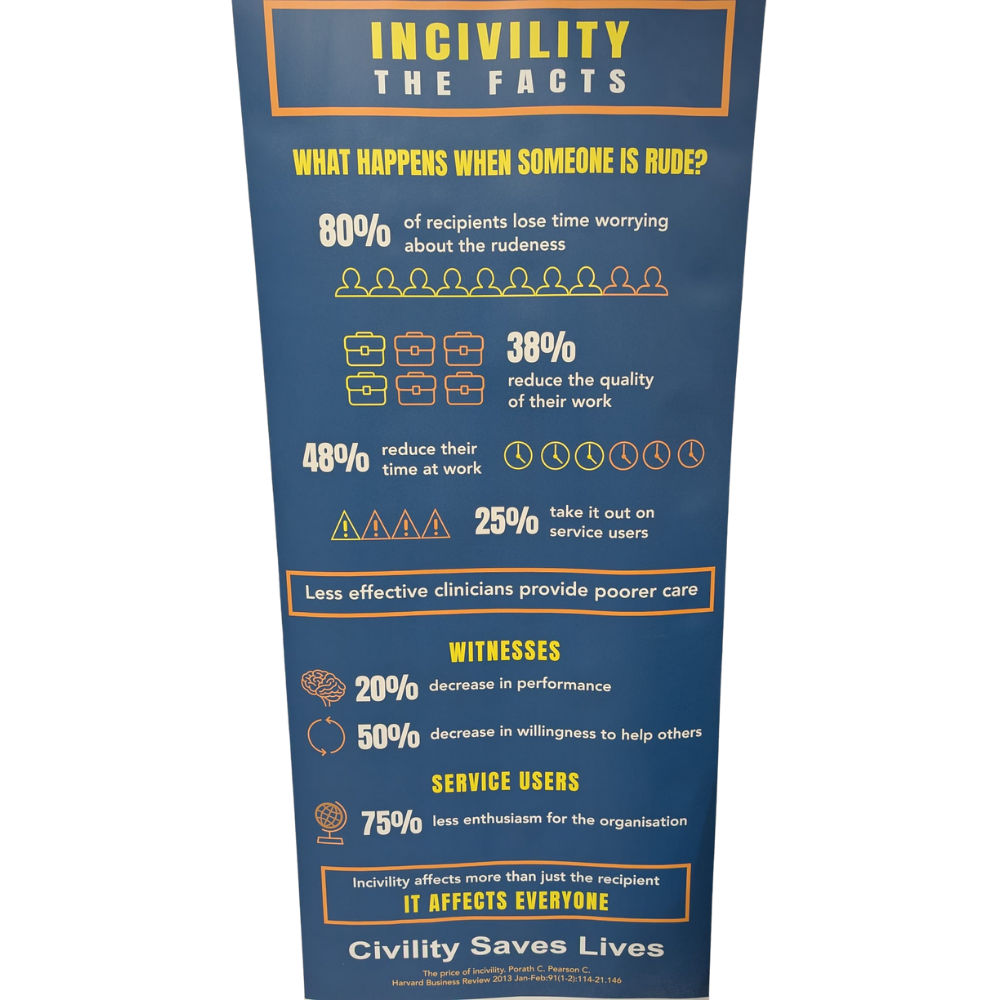
    Today, while I was down getting a plasma exchange, I spotted a poster on a roll-up banner that stopped me in my tracks. It wasn’t a warning about infections or a guide to washing hands. It was titled INCIVILITY: THE FACTS.

    A blue roll-up banner titled 'INCIVILITY: THE FACTS' displaying statistics on the impact of rudeness. Key figures include: 80% of recipients lose time worrying, 38% reduce work quality, 48% reduce time at work, and 25% take it out on service users. A central box states 'Less effective clinicians provide poorer care.' It also notes that witnesses suffer a 20% decrease in performance, and service users feel 75% less enthusiasm for the organisation. The footer reads: 'Civility Saves Lives.'
    The “Incivility: The Facts” banner I spotted on the ward. A stark reminder that rudeness has a measurable cost to patient care.
    Image by Douglas Ireland. Licensed under Creative Commons CC BY-SA 4.0.

    It turns out that being rude isn’t just unpleasant. It is dangerous.

    The poster laid out the hard data on what happens when someone is rude in a medical setting. The numbers are staggering. 80% of recipients lose time worrying about the rudeness. That is a massive amount of mental energy being diverted away from the job at hand. Even worse, 38% reduce the quality of their work and 48% reduce their time at work.

    In an office job, a 38% drop in quality might mean a bad spreadsheet. In a hospital, as the poster bluntly states, “Less effective clinicians provide poorer care”. The slogan at the bottom really drives it home: Civility Saves Lives.

    It got me thinking about a post I wrote a while back about catching flies with honey rather than vinegar. I wrote then that I had tried vinegar, sharp words and cold silences, and found it useless. This poster proves that it is not just useless; it is actively destructive.

    When you are nasty to someone, you are not just venting your own frustration. You are throwing a wrench in the gears. You are creating a blast radius. The poster notes that even witnesses to rudeness see a 20% decrease in performance and a 50% decrease in willingness to help others.

    Think about that. Being rude to one person makes the people watching half as likely to help someone else. It spreads like a virus.

    I learnt this lesson when I was a toddler. It didn’t take a Harvard Business Review study for me to figure out that it is infinitely easier to get someone to do something for you if you are nice to them. If you scream and stamp your feet, people shut down. If you smile and say please, doors open.

    It is beyond my belief that fully grown adults still struggle with this concept. You see it in shops, in traffic, and sadly, even in hospitals. People seem to think that being aggressive displays dominance or gets results. The data shows it does the exact opposite. It makes the people trying to help you slower, more worried, and less effective.

    My stay here has reaffirmed what I have always suspected. Being nice is not just a “soft” skill. It is an essential survival mechanism. Whether you are trying to get a nurse to check your IV or trying to navigate a difficult meeting at work, civility is the grease that keeps the machine running.

    So, if you can’t be nice just for the sake of being a decent human being, be nice because it is the only way to get anything done. As the banner says, incivility affects everyone.

    We could all do with remembering that politeness costs nothing, but rudeness can cost everything.

  • Fugitives in the Pasta Aisle: The Extreme Measures Needed to Protect Your Privacy

    Soundtrack to this post.

    Last month, I wrote about evicting “Big Data” from my digital life. I migrated my entire digital ecosystem onto my own server. It went far beyond simple file storage; I now host my own search engine, media streaming, location tracking, and full personal cloud, reclaiming my digital sovereignty from the likes of Google and Microsoft. It was a technical challenge, but it was a battle I could win. If you own the hardware, you own the rules.

    Stuck in a hospital bed, I have been researching how to apply that same logic to my weekly shop. This is not just an intellectual exercise. When I am discharged, I will be unable to drive for several months. My usual freedom to choose where I spend my money will be gone, shrinking my world down to walking distance. That leaves me with exactly one option: the Tesco just down the road. I would not normally choose them, but geography has made me a captive audience. Hoping to reclaim some agency, I thought I could code a solution from here, but I found the reality is far less forgiving.

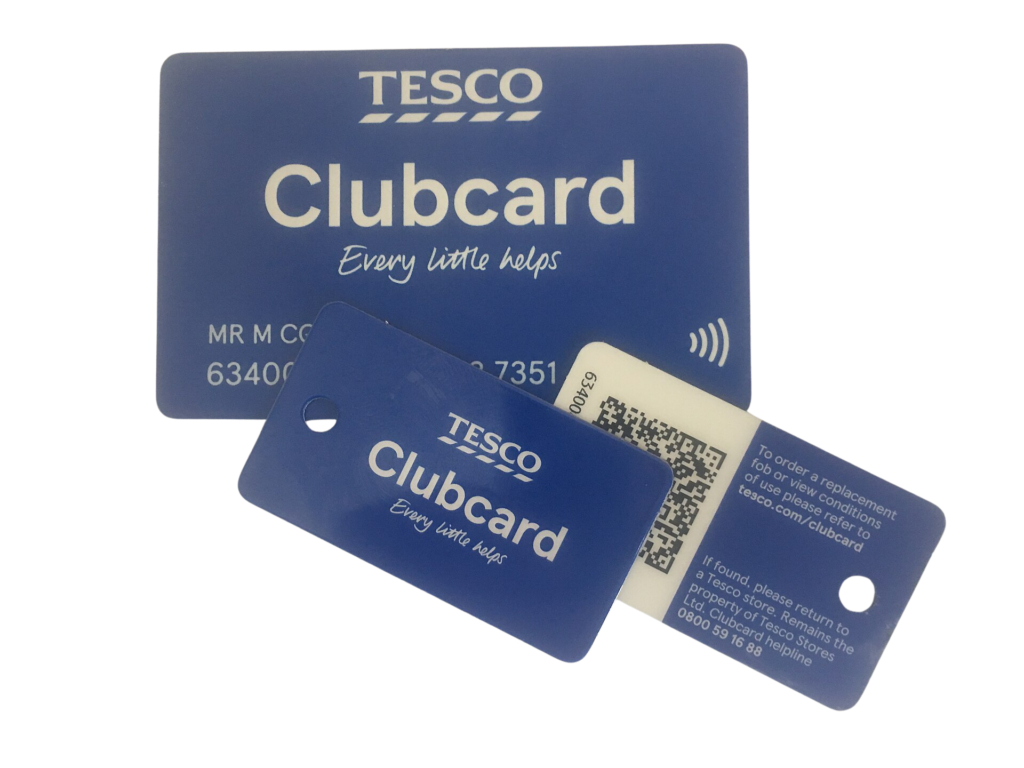
    The physical token of the data tax. To access the standard price, you must carry the tracker. – “The Tesco Clubcard containing contactless technology, and the keyfobs” by Marccoton, licensed under CC BY-SA 4.0.

    We are all familiar with the “Clubcard Price.” You walk down the aisle for coffee or olive oil and see two prices. The first is a reasonable £6.50. The second, for non-members, is a punitive £11.00. For years, we have been trained to view the lower price as a reward, a discount for loyalty. But let us be honest about what this really is. It is not a discount. It is a Data Tax. The £11.00 is a fine you pay for refusing to hand over your identity.

    I had a plan to circumvent this. Being a problem-solver, I thought about launching a service on this site: a “Communal Clubcard.” The idea was simple and socialist in nature. We would share communal cards, pooling our collective bargaining power to get the lower prices without giving Tesco our individual shopping histories. We would pollute their data stream with noise and reclaim the discount.

    It turns out, they are way ahead of me.

    I looked into the logistics, and the pitfalls are designed specifically to crush this kind of collective action. Tesco now uses “velocity checks” to detect if a card is used in Glasgow and London within the same hour, instantly locking the account. They have updated their scanners to reject screenshots of barcodes. They are phasing out physical cards in favour of apps that generate rotating, expiration-prone QR codes.

    They have not just made it difficult to share; they have engineered the system to ensure a one-to-one surveillance ratio. They do not just want a customer to buy the beans; they need to know that Douglas Ireland bought the beans, at what time, and what he bought alongside them.

    This brings me to a depressing realisation. I can self-host my email. I can self-host my photos. But I cannot self-host my groceries.

    In the digital world, open-source software like Nextcloud offers an escape hatch. If you have the skills and the patience, you can opt out of the surveillance economy. In the physical world, that escape hatch is being welded shut. The supermarkets have established a monopoly not just on food, but on the terms of exchange.

    There is a workaround, but it borders on spycraft. To avoid the tracking, I would need to set up a “burner” account with a fake name and a masked email address. Crucially, I would have to pay in cash every single time. If I were to slip up once and use my debit card, their systems could link that payment token to the burner account, retroactively tying every bag of pasta and pint of milk to my real identity.

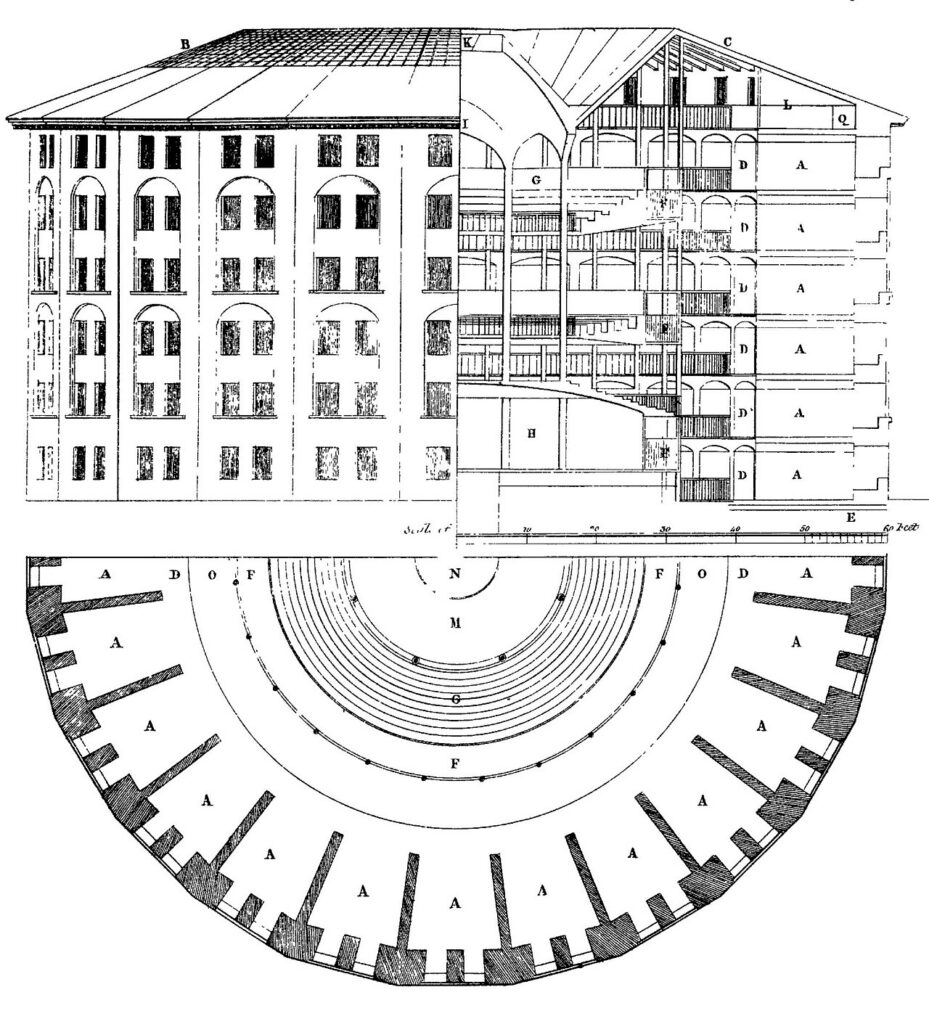
    Jeremy Bentham’s Panopticon (1791). A prison design where the inmates are constantly watched but cannot see the observer; the perfect metaphor for the modern supermarket aisle. – Plan of the Panopticon by Jeremy Bentham (1843), via Wikimedia Commons. Public Domain.

    Is this what privacy has become? A luxury good available only to those willing to act like fugitives in the pasta aisle?

    There is a profound inequality here. We often talk about the “poverty premium,” where being poor costs more (prepayment meters, high-interest loans). We are now seeing the emergence of a “privacy premium.” If you can afford to pay the non-member price, you get to keep your data. If you are struggling with the cost of living, you are forced to sell your privacy just to afford the basics.

    My attempt to build a communal alternative failed because the system is rigged against anonymity. But it was a useful failure. It highlighted that the fight for data sovereignty is not just about servers and code. It is about the right to exist in public spaces without being tracked, indexed, and profiled.

    I might have secured my digital home, but outside the front door, the company town is bigger than ever. And for now, it seems I have to choose between my principles and the price of olive oil.

    I am stuck paying the premium for now. If any readers have found a viable solution, I would be very interested to read about it below or on my Keep in Touch page.

  • Sleepless Nights and Side Projects: Building a Game from a Hospital Bed

    Soundtrack to this post.

    There’s nothing quite like a hospital stay to make you appreciate the small things, like silence, privacy, or a decent night’s sleep. Five nights in, and it looks like I’m here for a few more. The highlight of my stay so far? A spinal tap is on the cards. Joy.

    Last night was particularly rough. I couldn’t quite put my finger on whether it was the symphony of snores and other, less pleasant noises from my ward-mates, or just my brain refusing to shut down. Either way, sleep was not on the agenda.

    So, what’s a guy to do at 3 AM in a hospital ward? Well, if you’re me, you pull out your laptop and tinker with a side project. In this case, a lightweight web game designed for a sight-impaired friend.

    The game itself is a simple two-player reflex game. The goal was to make something accessible, private, and functional across both mobile and desktop browsers. No frills, no fuss, just a clean, responsive bit of fun.

    A screenshot of a mobile web interface displaying a reaction time result. Large, bold text in the centre reads "Your Time: 0.709s". The header displays "Rd 1" and "Me 1" on the left, with eye and speaker icons on the right. A link at the bottom reads "Back to douglasireland.com".
    Screenshot from the game.

    If you’re feeling curious (or just bored), you can give it a shot here: https://reflex.douglasireland.com/. I’d love to hear what you think.

    And if you’re up for a game against a very bored hospital patient, feel free to drop me a line via https://douglasireland.com/chat/. It’s not every day you get to play-test a game from a hospital bed, after all.

    If nothing else, this little project has been a good reminder that even in less-than-ideal circumstances, there’s always something productive (or at least distracting) to be done.

  • Let Scotland Go: A Kindness to Both Nations

    Soundtrack to this post.

    Well, this isn’t how I planned to spend my evening. I’m writing this from a hospital bed, thanks to a sudden issue with my right eye. It’s nothing serious, but it does mean I’m stuck here overnight. No access to my VPS terminal, no proper keyboard, just me, my thoughts, and a surprisingly comfortable NHS bed. And since I’ve got time to kill, I might as well write. Again.

    First off, let’s talk about the NHS. It’s not perfect, but it’s a bloody marvel. Free at the point of use, staffed by people who actually care, and despite years of underfunding and mismanagement, still managing to keep people alive and relatively well. I’m grateful for it. We all should be. So, if you’re reading this and you’re English, remember that the next time someone tries to tell you Scotland’s better off without independence. The NHS is one of the best arguments for why the UK should work. But it’s also a reminder of how badly Westminster can mess things up when it wants to.

    Right, now that’s out of the way, let’s get to the point. Why should the English support Scottish independence? I’m English myself, by the way. Grew up near Manchester, moved to Scotland ten years ago. And I’ve always believed in independence for Scotland. Not because I don’t like being English, but because I think it’s the right thing to do. So, let’s break it down.

    Democracy Actually Working

    Scotland votes one way. England votes another. And yet, Scotland gets dragged along with whatever England wants. That’s not democracy, is it? It’s like being in a flat share where one person always picks the TV programme, even when everyone else wants to watch something different. At some point, you’ve got to ask why you’re even sharing a flat.

    Scottish independence isn’t about nationalism in the flag-waving, chest-thumping sense. It’s about having a government that actually reflects the people it serves. Scotland’s more left-leaning. It’s more progressive on social issues. It’s greener. And yet, it’s stuck with a Westminster government that doesn’t give a toss about any of that. So, if you’re English and you believe in democracy, you should support Scotland’s right to choose its own path.

    A Greener Future

    Scotland’s got ambitious climate targets. It’s investing in renewables like it’s going out of fashion (which, let’s be honest, fossil fuels should be). But Westminster’s dragging its feet. More runways, more roads, more North Sea oil. It’s like trying to run a marathon with someone tying your shoelaces together.

    An independent Scotland could set its own environmental policies. It could push harder for wind, wave, and tidal energy. It could show the rest of the UK what a proper green transition looks like. And if you’re English and you care about the planet, wouldn’t you want that?

    Brexit (Yes, Still)

    Let’s not pretend Brexit’s going well. It’s not. Scotland voted to stay in the EU. It got dragged out anyway. And now it’s stuck with the economic fallout, the trade barriers, the whole mess. Independence would give Scotland the chance to rejoin the EU. To rebuild those trade links. To be part of a bigger, cooperative project again.

    If you’re English and you’re still clinging to the idea that Brexit was a good thing, fine. But if you’re one of the many who’ve spent the last few years watching in horror as the economy tanks and the government flails, why wouldn’t you want Scotland to have a way out?

    A Left-Wing Alternative

    Scotland’s politics are different. The SNP’s not perfect, but it’s miles ahead of Westminster on social issues, welfare, and public services. Labour’s resurgence in England? Great. But Scotland’s already got a left-leaning government. It’s just being held back by Westminster.

    An independent Scotland could be a proper left-wing alternative. It could show that another way is possible. Higher taxes for the rich, proper investment in public services, a real commitment to reducing inequality. If you’re English and you’re sick of the same old Westminster politics, wouldn’t you want to see that happen?

    It’s Not About Separation, It’s About Choice

    This is the big one. Supporting Scottish independence isn’t about wanting to break up the UK for the sake of it. It’s about recognising that Scotland should have the choice. That it should be able to decide its own future. And if you believe in self-determination, in the right of people to govern themselves, then you should support that.

    And here’s the thing: it’s not like Scotland and England would become enemies. We’d still be neighbours. We’d still trade, still cooperate, still share a history. But Scotland would finally have the chance to build the kind of country it wants to be.

    So, What Now?

    If you’re English and you’re reading this, think about it. Scottish independence isn’t a threat. It’s an opportunity. For Scotland, yes, but for England too. It’s a chance to rethink what the UK is, what it could be. To move away from this centralised, London-dominated mess and towards something better.

    And if you’re Scottish? Well, keep pushing. Keep making the case. Because independence isn’t just about nationalism. It’s about building a fairer, greener, more democratic country. And who wouldn’t want that?

    (Now, if you’ll excuse me, I’ve got to try and get some sleep in this very bright, very noisy hospital ward.)


  • Trump’s Donroe Doctrine: A Wake-Up Call for Scotland and the Left

    Soundtrack to this post.


    The world is sliding back into an era where “might makes right,” and Donald Trump’s so-called “Donroe Doctrine” is the latest proof. This policy, which effectively declares the Western Hemisphere as America’s backyard, isn’t just a threat to Latin America. It’s a wake-up call for Europe, the left, and, most importantly, for Scotland. If we’ve learned anything from the past week, it’s that relying on NATO for security is a gamble we can’t afford to take.

    The Venezuela Precedent: Imperialism in Action

    The US attack on Venezuela and the capture of President Nicolás Maduro was as predictable as it was illegal. Trump has spent the past year signalling his intent, and his National Security Strategy made it clear that he sees the Western Hemisphere as America’s sphere of influence. No international laws, no treaties, no alliances will stand in his way. The message is simple: if the US wants something, it will take it.

    What’s shocking isn’t just the blatant disregard for international law. It’s Europe’s response, or lack thereof. European leaders, who have spent years rallying support for Ukraine on the grounds of territorial integrity, are now stuck between condemning the US or backing its actions. Most have chosen to do neither, offering only weak, non-committal statements. Sir Keir Starmer’s response was particularly spineless, proving once again that when it comes to standing up to US imperialism, Europe lacks the backbone.

    The Venezuelan opposition leader, María Corina Machado, praised the US action, calling it a “huge step for humanity.” But let’s be clear: this wasn’t about justice or human rights. It was about control. Venezuela has the world’s largest proven crude oil reserves, and Trump’s administration has made no secret of its desire to secure those resources. This is classic resource colonialism, dressed up in the language of democracy and security.

    Greenland: The Next Target

    For Scotland, this should be a warning. If Trump is willing to invade Venezuela for its oil, what’s to stop him from turning his gaze to Greenland? The US president has made no secret of his desire to annex Greenland from Denmark, another NATO ally. And if he’s willing to use force, as he has in Venezuela, then Europe is facing a crisis of its own making.

    The problem is simple: Europe lacks hard power. It’s a continent that has spent decades relying on the US for security, only to find itself at the mercy of a president who treats international law like an inconvenience. If Trump takes Greenland by force (and make no mistake, he could), then NATO is finished. And if NATO collapses, Europe’s security unravels with it.

    Denmark’s Prime Minister, Mette Frederiksen, has warned that any US attack on a NATO ally would be the end of “everything.” Greenland’s Prime Minister, Jens-Frederik Nielsen, has urged Trump to give up his “fantasies about annexation.” But words alone won’t stop Trump. If he’s serious about Greenland (and all signs suggest he is), then Europe needs a plan. And so does Scotland.

    Scotland’s Dilemma: Independence or Complicity?

    This isn’t just about security: it’s about sovereignty. If Denmark can’t count on NATO to protect Greenland, what hope is there for Scotland? The truth is, we’re better off charting our own course. Independence isn’t just about self-governance, it’s about self-defence. It’s about building a nation that stands on its own principles, not one that bends to the whims of an imperial power.

    The lesson from Trump’s Donroe Doctrine is clear: in a world where the strong do what they can and the weak suffer what they must, Scotland must build its own resilience. That means investing in renewable energy, strengthening democratic institutions, and forging alliances based on mutual respect—not imperialism.

    A Leftist and Green Perspective

    For the left, this is a moment to reject the false dichotomy of US imperialism versus European weakness. We need a third way: a politics of international solidarity, anti-colonialism, and environmental justice. Scotland, with its vast renewable energy potential, could be a leader in this movement. We could show the world that another way is possible; one that doesn’t rely on military alliances or resource wars.

    The Green perspective is equally clear. Trump’s aggression is driven by a desire for oil and minerals. The answer isn’t to compete in this race to the bottom. It’s to reject it entirely. Scotland could lead the way in building a green economy that doesn’t depend on the exploitation of other nations’ resources.

    The left and the Green movement must unite

    The world is changing, and not for the better. Trump’s aggression is a reminder that international law is only as strong as those who enforce it. For Scotland, the choice is simple: do we want to be part of a crumbling alliance, or do we want to stand on our own? The time to decide is now.

    The left and the Green movement must unite around a vision of independence that rejects both US imperialism and European complacency. We need a Scotland that is sovereign, sustainable, and socialist. Anything less is a betrayal of our principles and our future.

  • Seizing the Means of Connection

    Soundtrack to this post.

    As we enter 2026, many of us are making the usual resolutions to spend less time on our screens or eat more healthily. My resolution is different. I am not trying to spend less time on the internet; I am trying to change how I inhabit it. I am moving “Big Data” out of my life and moving my digital existence onto my own Virtual Private Server (VPS).

    Image: Warded lock
    by Thegreenj
    via Wikimedia Commons, licensed under CC BY-SA 3.0. A threshold to a digital space that belongs to you, not a billionaire.

    This sounds like a technical project, but it is fundamentally a political one. For years, we have lived in digital company towns. We do not own the square where we speak; corporations do. We saw this reality on full display at the start of this year. Men like Elon Musk and Mark Zuckerberg were not just guests at Donald Trump’s second inauguration. They were right at the front, seated in positions of honour that were traditionally reserved for family and cabinet members. It was a clear signal of the increasingly close bond between political power and the billionaire owners of the digital platforms we use every day. We do not own our memories or our data; we merely rent space from them. We have become tenants on digital land that can be sold, gated off, or strip-mined for AI training data at a moment’s notice.

    Aaron Swartz spent his life fighting to liberate knowledge and he understood these power dynamics perfectly. He famously said that information is power. But he also knew that like all power, there are those who want to keep it for themselves.

    Right now, that power is concentrated in a few corporate boardrooms. They treat our data as a raw material to be extracted, which is a modern version of the old enclosures that fenced off the physical commons centuries ago. By self-hosting, we are rejecting this new feudalism. We are stating that our words and connections are not commodities to be monetised by billionaires.

    This is especially vital as we enter the era of AI. If AI is going to eliminate jobs, we have to ask what the new economy will actually look like. In a world where human labour is replaced by machine intelligence, data becomes the primary resource. It is the fuel that runs the entire system. The question of who controls that data is the question of who holds the power in a post-scarcity world.

    In his 1930 essay, “Economic Possibilities for Our Grandchildren,” John Maynard Keynes predicted that by 2030, technological progress would allow us to work only fifteen hours per week. He believed we would have solved the “economic problem” and would instead be grappling with how to spend our newfound leisure time. We are almost at that 2030 deadline, yet the fifteen-hour week feels further away than ever.

    Replacing work should be a good thing. Most people only work because they are paid to do so. But Keynes’s vision failed because the gains from productivity were not distributed; they were captured. If the data that powers the AI future stays in private hands, we will not get leisure. We will get a deeper kind of dependency. Reclaiming our data is the first step in ensuring that a world without work is a world of freedom, not just one of mass unemployment and corporate control.

    There is a misconception that data sovereignty is only for the technical elite. That is no longer the case. The tools to reclaim your data, such as the open-source platform Nextcloud, are now mature and accessible to anyone with a little curiosity. You do not need a computer science degree to stop being a product.

    Admittedly, it is a little less convenient. You have to manage your own backups and occasionally learn how a new piece of software works. However, that small amount of friction is worth the reward. It is the difference between buying a microwave meal and cooking from scratch. When you cook for yourself, you know exactly what is in the pot. You know where the ingredients came from, and you are no longer at the mercy of a corporation’s supply chain.

    You also get to eat in peace. When you host your own services, the advertising disappears. You are no longer being shouted at by brands or tracked by algorithms trying to sell you back a version of yourself. You gain a sense of resilience, a cleaner digital environment, and a deeper understanding of the tools you use every day.

    There is also a hidden environmental cost to the Big Tech model. Because their business relies on extracting and storing every possible scrap of our data to train AI, they have built an infrastructure that is staggeringly wasteful. These data centres consume vast amounts of power and water just to maintain the digital landfill they use for profit. Choosing to self-host is a way to reject that waste. It allows for a more conscious, lean way to live online. When you only host what you actually need, you are practising a form of digital conservation. It is a radical choice that proves “small is beautiful” applies just as much to our servers as it does to our communities.

    My resolution for 2026 is to stop being a digital tenant and become an owner. In a world where every part of our identity is for sale, keeping something for yourself is a revolutionary act.

    Oh, and I’m quitting vaping too, because one form of cloud hosting is probably enough for one year.

  • Ticking Backwards

    Soundtrack to this post.

    The news filtered through this morning not with a bang, but with the quiet finality of a ballot count. Reform UK has won its first contested election in Scotland. David McLennan took a council seat in Whitburn and Blackburn, beating out both Labour and the SNP.

    It was not a defection this time. It was not a politician changing jerseys mid-match because the wind changed direction. It was a proper win at the ballot box. And that matters.

    For a long time, we have told ourselves that Scottish politics is immune to the brand of populism sweeping the south. We have our own distinct political ecosystem, we said. We have the independence question to anchor us. But looking at the numbers (McLennan winning by 149 votes over the SNP) it seems that immunity is wearing off.

    I avoided Question Time the other night. Life is too short for that kind of manufactured anger. But reading the reports this morning, it sounds like pantomime. Lord Offord and Russell Findlay bristling at each other while the SNP’s Stephen Flynn makes popcorn jokes. It is all very performative. It is all very loud.

    Image: Florella and vacant shop by Richard Sutcliffe via Geograph.org.uk, licensed under CC BY-SA 2.0.

    But under that noise, there is a quiet, frustrated signal coming from places like Whitburn.

    McLennan claims he entered politics because of the “unfairness” towards landlords. That is a staggering admission. To me, being a landlord is often just ticket touting with bricks. You buy up a limited resource, create artificial scarcity, and sell access back to people who actually need it at a profit. It is a scourge.

    But here is the question. Are the 1,177 people who voted for him really losing sleep over the plight of buy-to-let investors? Are the voters in West Lothian really that concerned that property portfolios are not yielding enough profit?

    I doubt it.

    I suspect their vote is less about landlord rights and more about a deep, gnawing feeling that the established machinery just is not working for them. When Labour’s vote collapses and the SNP cannot hold the line, people look for a different door. Even if that door is held open by someone whose primary political motivation is protecting rent seekers.

    That is the tragedy here. Reform is stepping into a vacuum created by failures in housing, in public services, and in trust. They are offering simple answers to complex problems. And while we might find their answers worrying, we cannot ignore that people are listening.

    As someone who believes in an independent, green, and socially just Scotland, this is a wake-up call. We cannot just dismiss this as the “scunner factor”, that uniquely Scottish sense of being thoroughly sick and tired of it all, and hope it goes away. We cannot just label voters as “extreme” and move on. That is how you lose.

    Mainstream politics in Scotland has felt like a broken smartwatch lately. It is full of features nobody asked for, it constantly needs updates, and the battery dies just when you need it. Reform is offering a different device entirely. It might be ticking backwards, but at least the display is clear.

    We need to offer something better. Not louder, just better. More grounded. More human.

    We need to reconnect with the people who feel left behind in Whitburn, in Paisley, and everywhere else. We need to show that progressive politics is not just about high-minded debates in Holyrood, but about fixing the things that actually break in people’s lives.

    The political weather is changing. We had best be ready for it.

  • Moving (Digital) House

    Soundtrack to this post.

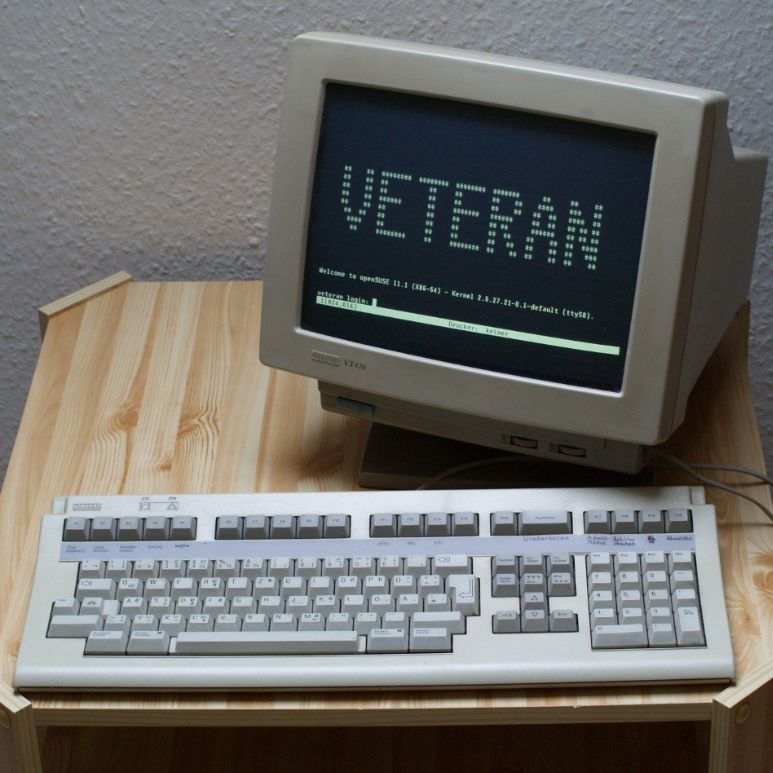
    A DEC VT420 terminal (1989). Photo by Jacek Rużyczka / CC BY-SA 3.0.

    I have been doing some renovations. Not on the house, but here on the site.

    For a long time, this blog lived in a rented room. I used EasyWP from Namecheap. It was functional. It worked. But it felt like living in a hotel. You can sleep there, but you are not allowed to drill holes in the walls or change the locks.

    I decided it was time to move out. I have spent the last three days migrating everything to my own VPS (Virtual Private Server). It was surprisingly quick. I expected a week of headaches, but it has gone smoother than I thought.

    The Economics of Independence

    We are often told that convenience is worth paying for. Usually, I agree. But in the world of hosting, the markup for convenience is steep.

    My previous setup was a patchwork of services. I was paying £7.40 a month for the WordPress hosting. On top of that, I paid £5 a month for Mullvad VPN to keep my browsing private. That is over £12 a month just to exist online securely.

    My new VPS costs £3.05 a month.

    For that price, I get more storage and traffic allowance than I will ever need. I have migrated the WordPress site. I have also set up WireGuard on the server. This replaces my Mullvad VPN subscription entirely.

    The maths is undeniable. I am saving nearly ten pounds a month, and I am getting more for it.

    The “Douglas Ireland” Cloud Stack

    The best part of this move is knowing exactly what is running under the bonnet. There is no “black box” anymore. I built the system, so I know how it works.

    Here is the current setup.

    1. The Foundation – I am using Hetzner Cloud based in Germany. It feels appropriate for a project focused on privacy to host the data within Europe. The OS is Ubuntu 24.04.3 LTS (Noble Numbat) running Linux Kernel 6.8.0. It is solid and stable.

    2. The Architecture – I went for a hybrid approach.

    • Host Level: Nginx runs natively. It handles the public traffic and manages the SSL certificates via Let’s Encrypt.
    • Container Level: Everything else runs in isolated Docker containers. They talk to each other through a custom internal bridge network.

    3. The Silence (Privacy & Ads) – This is the feature I am most pleased with.

    • VPN: I am running WireGuard (via the wg-easy image). It is faster and leaner than older protocols.
    • Ad Blocking: I have AdGuard Home running as a network-wide DNS sinkhole.
    • The Link: The VPN and AdGuard are linked internally. When I connect my phone or laptop to the VPN, all the DNS queries are forced through AdGuard. It scrubs the ads and trackers before the data even reaches my screen.

    4. The Applications

    • The Blog: douglasireland.com is running on a native Nginx/PHP implementation.
    • Coming Soon: I am looking to implement my own cloud storage and password manager next. That will save me even more money in the long run, but for now, I am taking it one step at a time.

    5. Maintenance – I don’t want to spend my life running updates manually. I have Watchtower running in the background. It checks for Docker image updates every 24 hours and applies them automatically.

    Escaping the Walled Garden

    Managed hosting is a walled garden. They keep it tidy for you, but they also lock the gates.

    They block certain plugins. They restrict file access. On a VPS, I have “root access.” That means I hold the keys to the entire building.

    If I want to run a Python script alongside this blog? I can. If I want to host my own password manager later down the line? I can. If I want to mess up the configuration and break the whole thing? I can do that too.

    That risk is part of the appeal.

    The Joy of Logic

    There is a satisfaction in getting a system to run perfectly. It is the same feeling you get when you finally crack a difficult crossword clue or fit the last piece of a puzzle into place.

    Setting this up required reading, learning, and typing commands into a terminal window. It gave me something to do. I am genuinely enjoying learning about how the internet actually functions.

    When I get a new service running, like the WireGuard VPN which now shields all my devices rather than just the five Mullvad allowed, I feel a real sense of accomplishment.

    Mid 90s Style Independence

    Ultimately, this is a philosophical choice.

    We have drifted into an era where we rent everything from Big Tech. We trade our data for ease of use. Moving to a VPS is a small act of rebellion. It is about data sovereignty. I control the backups. I control the logs. I am not relying on an ecosystem that might change its terms of service tomorrow.

    It feels like the internet of the mid 90s. It is a bit rougher around the edges, perhaps. But it is mine.

  • One In, One Out

    Soundtrack to this post.

    I have a page on this site called library. It is a curated collection of the media that matters most to me. The books I re-read, the films that fundamentally shifted my perspective, and the tracks that sound like home.

    I decided early on that I wanted ten of each. It seemed like a good, round number to aim for. A limit that would force me to be picky. I thought it would be simple.

    But sticking to that number has created two very different problems.

    For books and films, the number is too high. I am currently sitting at nine books and only five films. I refuse to fill the slots just to hit a quota. A film has to earn its place, and apparently, I am a harsh critic. I am content to wait until the right ones appear.

    Music is the opposite problem. Ten is nowhere near enough.

    My list of “tracks that sound like home” is constantly overflowing. Ten songs is not a library. It is a lifeboat.

    Trying to whittle down forty years of listening habits into ten slots feels less like curation and more like betrayal. How do you choose between the raw energy of Utah Saints and the narrative perfection of Squeeze? Do I keep Johnny Cash because it’s profound, or swap him for Belinda Carlisle because she’s joyful?

    I don’t want to expand the list to twenty or fifty because that dilutes the meaning. The constraint is the point. But you have to prune a garden, or it just becomes a weed patch.

    So I am instituting a new rule: One in, one out.

    When a new song demands entry, an old favorite has to leave. This isn’t a demotion. It is just a necessary edit.

    To ensure those leaving aren’t lost, I am making this post a living archive. Whenever I make a swap, I will come back and edit this post, adding the departing favourite to the list at the bottom. It serves as a tribute, ensuring nothing is ever truly forgotten.

    The First Swap

    Hey There Delilah

    The first addition to the list is Hey There Delilah by Plain White T’s. It wasn’t a profound moment of discovery. I was literally putting on a plain white t-shirt, made the connection to the band name, and remembered how much I love the track. It needs a spot.

    To make room, I am removing New Shoes by Paolo Nutini. There was no spreadsheet or criteria for this removal. I just listened to my gut. It feels like the right one to move to the archive for now.


    The Archive: Forgotten Favourites

    • New ShoesPaolo Nutini – Another Paisley son. It captures that specific feeling of waking up and deciding today is going to be alright. Simple acoustic joy. (Removed Nov 2025)
    • BarcelonaFreddie Mercury & Montserrat Caballé – A collision of worlds. Opera meets rock in a way that shouldn’t work but becomes transcendent. Pure, unapologetic grandeur. (Removed Dec 2025)
    • Just Can’t Get EnoughDepeche Mode – Before they got dark, they were joyful. This is synth-pop at its most innocent. Impossible to listen to without tapping a foot. (Removed Dec 2025)
    • Up On the RideGuillemots – A chaotic, joyful explosion of sound. It feels like a carnival ride in the dark. Impossible not to smile. (Removed Dec 2025)
    • Dry Your EyesThe Streets – A breakup song that sounds like a voicemail from your best mate. It doesn’t try to be poetic; it’s painful, awkward, and totally honest. The sound of a night out ending in tears and a kebab. (Removed Mar 2026)
    • QuadropheniaFranc Roddam – The definitive portrait of British youth culture and the search for identity. Driven by The Who’s thunderous soundtrack, it captures the electric, drug-fuelled chaos of being young, angry, and dressed sharper than everyone else. (Removed Mar 2026)
    • Chantilly LaceBig Bopper – A problematic classic. The lyrics are undeniably dated, but the manic, pantomime energy of the performance is impossible to resist. A snapshot of rock ‘n’ roll history. Flawed, loud, and alive. (Removed Mar 2026)