Tag: Paisley 10K

  • Bellahouston 10K plan

    Soundtrack to this post.

    Race week Bellahouston Park 10K · Sat 22 Aug
    1. Sat 15 rest A walk if I fancy it.
    2. Sun 16 Long run, outdoors 40 to 45 min, 9 run / 1 walk. Roughly 6.5 to 7 km at about 7:00/km. The one session this week that changes anything.
    3. Mon 17 rest
    4. Tue 18 Easy 30 min Outdoors, same 9 / 1 rhythm. Keeping my legs turning over, nothing more.
    5. Wed 19 rest
    6. Thu 20 Shakeout, 20 min Very gentle. I cut it short or skip it if it feels like effort.
    7. Fri 21 rest Kit out, start time checked, water on.
    8. Sat 22 Bellahouston 10K Two laps of the park. First one should feel too easy.
    Pace band 9 run / 1 walk · target 70 min
    Clock Doing Roughly at
    0:00 to 9:00Run1.4 km
    9:00 to 10:00walk
    10:00 to 19:00Run2.9 km
    19:00 to 20:00walk
    20:00 to 29:00Run4.3 km
    29:00 to 30:00walk
    30:00 to 39:00Run5.8 km
    5K around 35:00
    39:00 to 40:00walk
    40:00 to 49:00Run7.2 km
    49:00 to 50:00walk
    50:00 to 59:00Run8.7 km
    59:00 to 60:00walk
    60:00 onwardsRun it in10 km
    I take the first walk break at 9 minutes even though I will not want to.
    I walk briskly. I do not stop, and I start running the second the minute is up.
    If 9 minutes feels long on the second lap, I drop to 5 run / 1 walk and keep going.
    If the phone fails no audio cues · course signs only
    1. 2km
    2. 4km
    3. 6km
    4. 8km
    I walk for one minute after each of these markers. Four breaks, read off the course signage.
    Two laps of the same 5 km loop, so the 6 km break is at the sign marked 1 km on my second lap, and the 8 km break is at the sign marked 3 km. Worth working out which physical signs those are before the start.
    A walk minute that runs to seventy seconds costs me nothing.
    Between breaks I run at whatever feels conversational.
    From the 8 km break I run the last 2 km all the way in.
  • A Race I’m Not Ready For

    Soundtrack to this post.

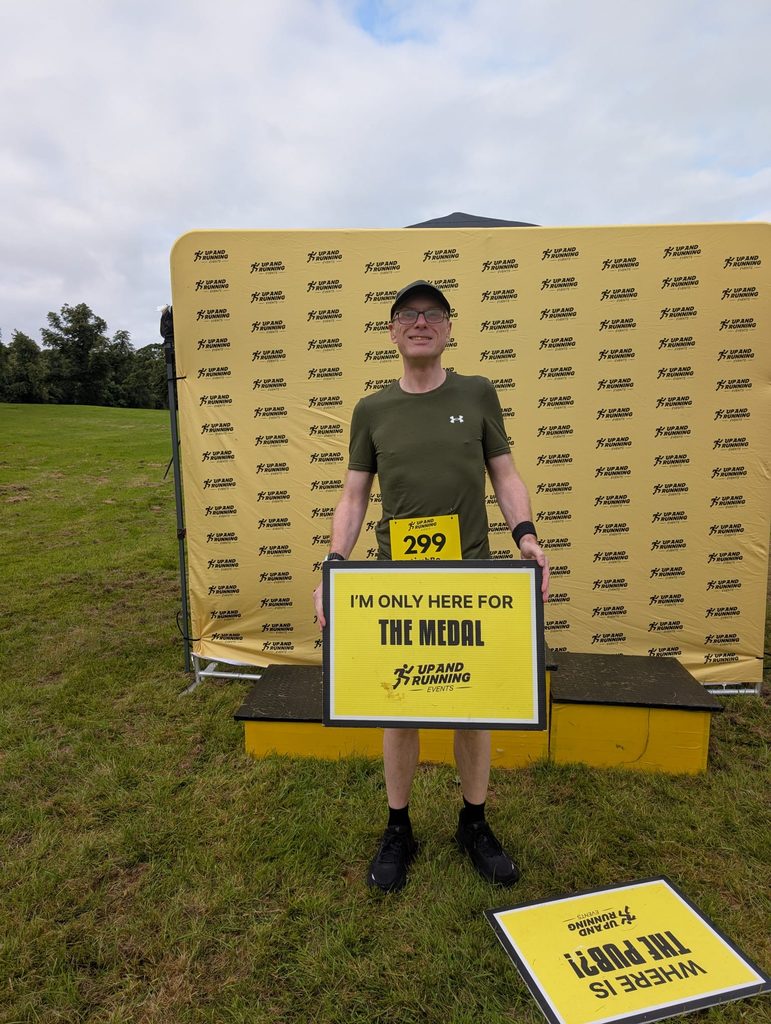
    I signed up for the Bellahouston Park 10K this evening, and I regretted it almost immediately.

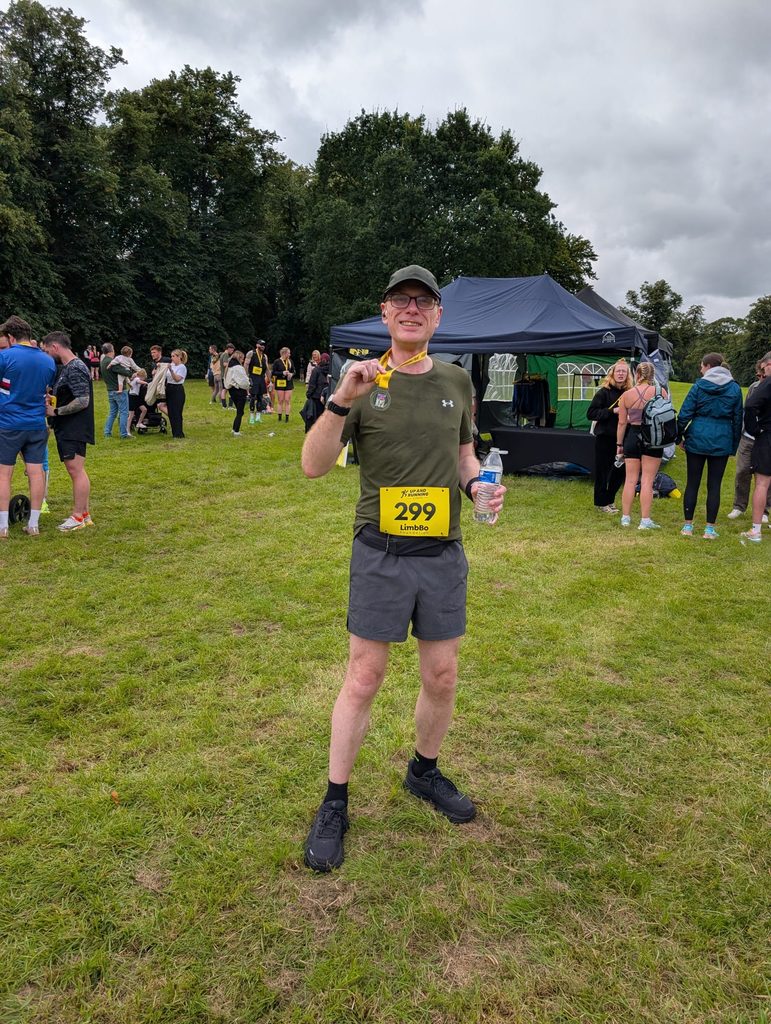
    It wasn’t my idea. Stephanie talked me into it0, though I won’t pretend the bespoke finisher’s medal didn’t help. I’ve never had a running medal before, and there’s something almost embarrassing about how effective that turned out to be as an incentive.

    Her reasoning went something like this: I’m not going to run it in fifty minutes, or even an hour, so there’s no point going in with any real expectations. But that’s exactly what makes it useful. It’s a fixed point on the calendar, a number I can look back at in a year and measure everything else against. Not a race to win, just a race to have run.

    I’m seven weeks into Couch to 5K. Last week I ran my fastest ever Linwood parkrun, 29:15, a proper PB and comfortably inside the 30-minute 5K target I set myself. That’s the good news. The less good news is that Bellahouston Park is a 10K, on the 22nd of August, and I’ve still got two weeks of Couch to 5K left to run. The race lands right as I finish the programme, not after it.

    Couch to 5K Week 7
    • Day 1 completed
    • Day 2 completed
    • Day 3 completed
    WEEK 7 COMPLETE

    So the honest arithmetic looks like this: double a 29:15 5K and you get somewhere near 58 minutes for 10K, if pace held perfectly over double the distance, which it never does. Distance takes more out of you than a calculator thinks it will, and I’m still closer to the start of a training plan than the middle of one. An hour is not a sensible target for the 22nd of August. It might not even be a realistic one.

    But that’s sort of the point, and it’s why I said yes even while I was regretting it. This whole year is built around one number: a sub-50-minute Paisley 10K, twelve months from now. I’ve written before about starting that plan from a standing stop, and about the parkrun that turned into an unplanned checkpoint along the way. Bellahouston is the first time the plan has been tested against the actual distance rather than a fraction of it. It’s not a rehearsal I chose for myself. It got handed to me, earlier than I’d have picked, at a stage of training where I have no business expecting a good time.

    And that’s exactly why it’s a benchmark and not a race. A benchmark only tells you anything if the first reading is allowed to be a bit rough. If I waited until I felt ready to run a 10K, I’d never get a number down early enough for it to mean anything later. Stephanie’s version of that idea was kinder than mine, when I put it that way to her, she pushed back: “Yeah but can we make it a wee bit more positive? My thought process wasn’t that you were going to be fabulous, you have done really well but this is to see how far you will go.” She wasn’t wrong, and it’s a better way of putting it than mine was. The value isn’t in the time on the day. It’s in having a time at all, from this exact point in the plan, to set against whatever I run in the months after.

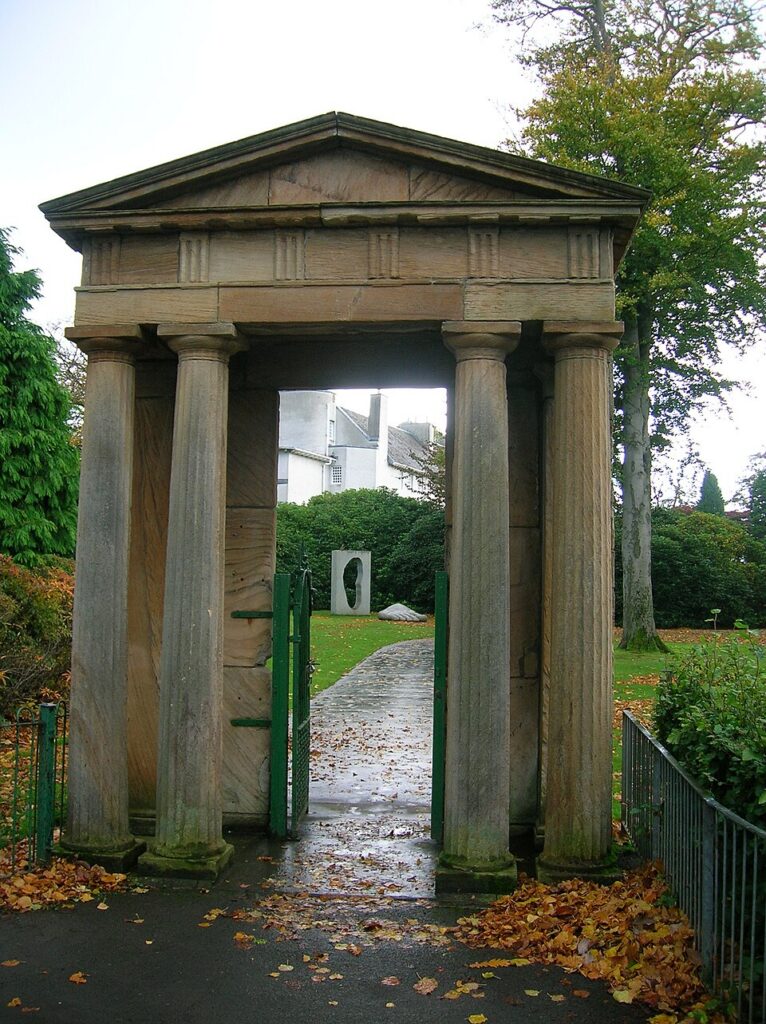
    The Doric portico from the demolished Ibroxhill House, standing in Bellahouston Park, Glasgow.
    The portico from the demolished Ibroxhill House, now standing in Bellahouston Park, where I’ll be running on the 22nd of August
    Photo: Rosser1954 Roger Griffith, public domain, via Wikimedia Commons

    So on the 22nd of August I’ll turn up at Bellahouston Park having just finished Couch to 5K, and run further than I’ve ever run in one go, at whatever pace that turns out to mean. I expect it to be slow, and probably uncomfortable somewhere around the seven or eight kilometre mark where the programme hasn’t taken me yet. I’m not signing up to do well. I’m signing up so that next summer, on the actual Paisley start line, I’ve got something honest to compare it to.

    I’m still not entirely sure I should have said yes. But I think Stephanie was right to talk me into it anyway.

  • From Couch to 10K: My Year-Long Journey to Paisley 10K

    Soundtrack to this post.

    I’m 46, currently working through Couch to 5K (week 6), and I’ve just set myself a proper goal: run the Paisley 10K next year in under 50 minutes.

    Where I’m starting from

    Let’s be honest about the baseline. My most recent run was 4.64 km in 32 minutes 58 seconds, a pace of roughly 7:06 per km. Eight years ago I ran a parkrun 5K in 23 minutes, so I know there’s another gear in there somewhere. It’s just been a while.

    This year’s Paisley 10K is only a couple of weeks away, which is clearly too soon. But next year? That feels like a target worth training for properly.

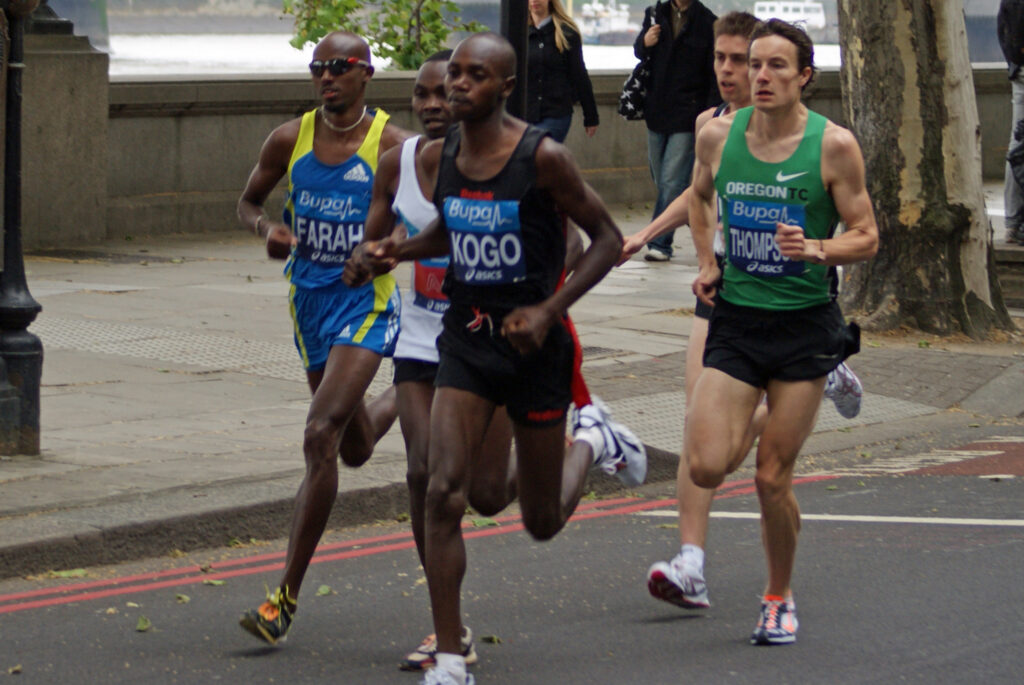
    Elite marathon runners including Mo Farah competing in the 2010 Bupa London 10K road race
    Elite runners at the 2010 Bupa London 10K, the kind of pace I’m chasing over the next year.
    Photo by Julian Mason, via Wikimedia Commons, licensed under CC BY 2.0

    The goal

    50 minutes for 10K means averaging 5:00 per km. Compared to where I am right now, that’s ambitious. Compared to my parkrun pace from 8 years ago (4:36/km), it’s realistic. Somewhere between “achievable” and “will require actual work,” which is exactly where a good goal should sit.

    The plan

    Rather than just wing it, I’ve broken the year into six phases:

    Phase 1, Finish C25K (weeks 1–3): Complete the programme as designed, finishing with a continuous 30-minute 5K.

    Phase 2, 5K consolidation (weeks 4–10): Three runs a week, easy, tempo, and long, plus fortnightly interval sessions. Goal: bring the 5K down to around 26–27 minutes.

    Phase 3, Build to 10K (weeks 11–20): Shift focus to distance using a bridge programme, growing the long run from 5K toward 8–9K, increasing no more than about 10% a week.

    Phase 4, 10K-specific training (weeks 21–36): Four runs a week, with tempo runs tightening toward 5:00/km pace and intervals like 5×1km at 4:45–4:50/km. Long run builds to 12K.

    Phase 5, Peak and taper (weeks 37–44): Race-pace intervals, a long run peaking at 12–14K, then a two-week taper.

    Phase 6, Race week: Easy runs or rest, then race day.

    Checking in along the way

    The plan includes a built-in reality check around month six or seven: if my 5K pace isn’t approaching 4:45–4:50/km by then, 50 minutes might need to shift from “the goal” to “the stretch goal.” Better to know that with months to adjust than to find out in the final week.

    Why write this down publicly

    Partly accountability. It’s harder to quietly let a goal slide when it’s sitting on the internet with your name on it. Partly because I know I’m not the only person starting from a C25K app and wondering if a 10K is really possible in a year. It is. It just takes patience and a plan.

    I’ll post updates as I move through each phase, starting with finishing C25K in the next few weeks.