Soundtrack to this post.
The three quotes at the top of this blog aren’t decoration. They’re a kind of shorthand for how I look at the world, and for the pace at which I’ve learned to do so.

George Orwell writes: “If I had understood the situation a bit better I should probably have joined the Anarchists.” I’ve always liked how provisional that sentence is. It isn’t a slogan or a posture. It’s an admission that understanding changes you, and that many political positions only look unreasonable when viewed from a distance. Orwell isn’t pledging allegiance so much as acknowledging that power, when examined closely, often looks less legitimate the longer you stare at it.
That line resonates with me because anarchism, as a philosophy, has always felt less like chaos and more like an ethical demand. It asks us to justify authority, to minimise coercion, and to trust people more than systems. The older I get, the more persuasive that feels, not as a fantasy of perfect freedom, but as a framework for asking difficult questions about who decides, who benefits, and who bears the cost.

Ian Dury’s line, “It takes much longer to get up north, the slow way,” is personal in a different way. I grew up in the Manchester area and moved to Scotland at 36. Ten years ago now. It took me a long time to go up north, in every sense. Geography, money, inertia, and habit all have their own gravity. The slow way isn’t just about distance on a map. It’s about the routes that are available to you at a given point in your life.
There’s no self‑pity in that lyric, just a recognition that movement is uneven. Some people get express trains. Others change twice and wait on cold platforms. I recognise that in my own story and in the wider world. Progress, whether personal or political, rarely arrives all at once. It comes in stages, through weather, detours, and delayed connections.
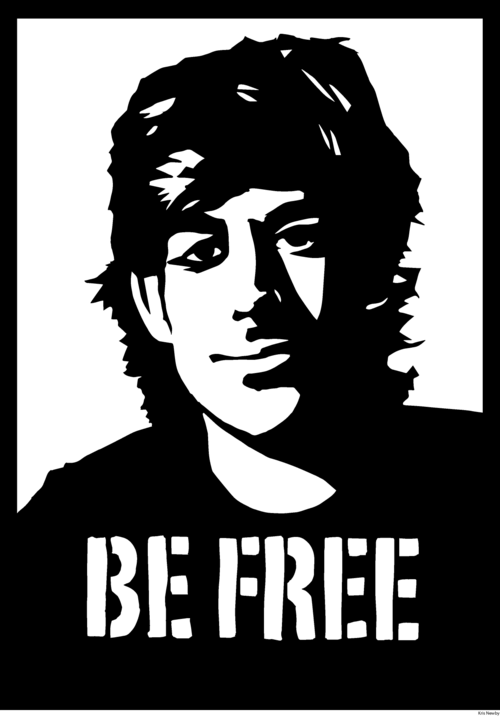
Aaron Swartz puts the sharpest edge on it: “Information is power. But like all power, there are those who want to keep it for themselves.” Once you accept that, a lot of the modern world makes grim sense. Who gets to know things, to fix things, to question things, is never accidental. Control over information quietly shapes what feels possible.
That’s one reason this site exists as it does. I built my first website in 1995, back when the internet was slower, stranger, and less certain of itself. Before dopamine loops and surveillance became the default business model. This blog is deliberately quiet. No metrics, no amplification economy, no pressure to perform. Just writing when it’s ready.
Taken together, these three quotes point toward the same instinct. Scepticism of unquestioned authority, patience with complexity, and a belief that understanding, real understanding, takes time. They gesture toward anarchism not as an identity to wear, but as a lens. A way of asking better questions about power, community, and responsibility.
That’s the ground this blog grows on. Reflections on digital rights, climate, social justice, and everyday life in the west of Scotland, mixed in with football, watches, and naps. An attempt to be a principled citizen without forgetting to be a regular human, and a reminder that taking the slow way isn’t a failure. Sometimes it’s the only way you actually learn where you are.
Leave a Reply