Tag: Open Source

  • Seizing the Means of Connection

    Soundtrack to this post.

    As we enter 2026, many of us are making the usual resolutions to spend less time on our screens or eat more healthily. My resolution is different. I am not trying to spend less time on the internet; I am trying to change how I inhabit it. I am moving “Big Data” out of my life and moving my digital existence onto my own Virtual Private Server (VPS).
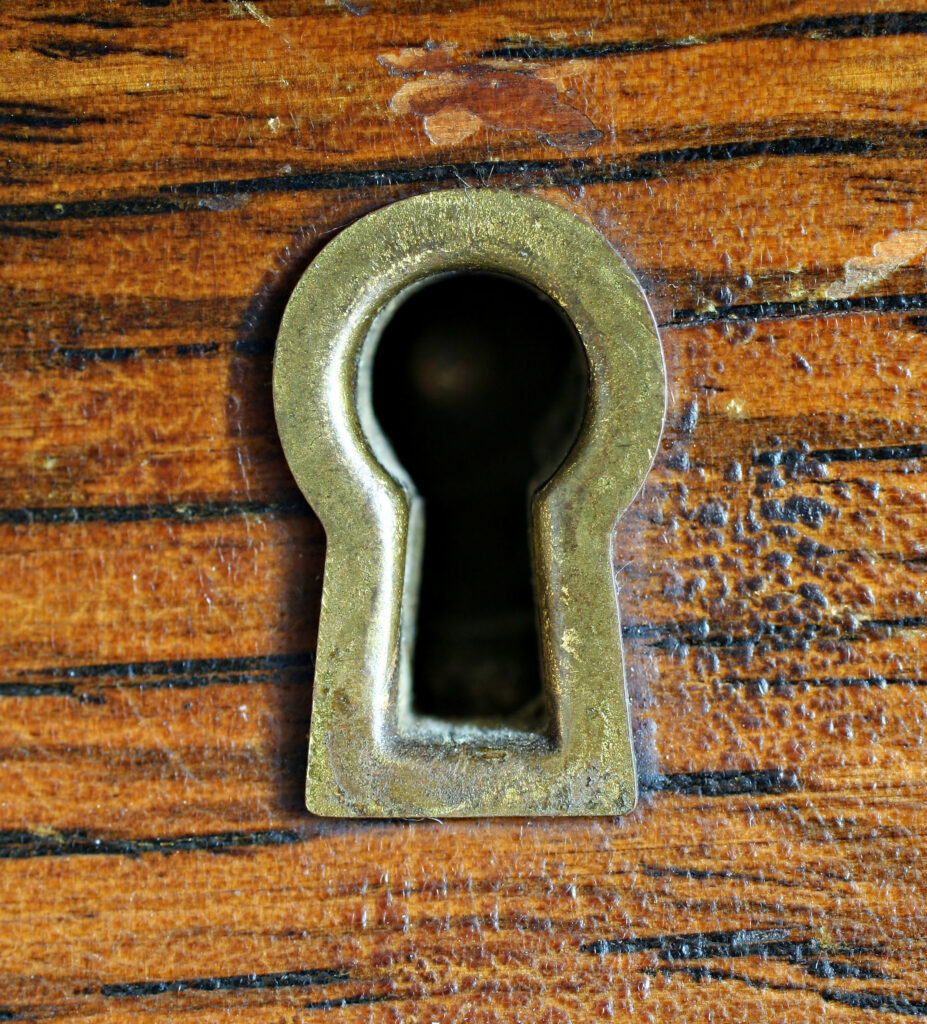
    Image: Warded lock
    by Thegreenj
    via Wikimedia Commons, licensed under CC BY-SA 3.0. A threshold to a digital space that belongs to you, not a billionaire.

    This sounds like a technical project, but it is fundamentally a political one. For years, we have lived in digital company towns. We do not own the square where we speak; corporations do. We saw this reality on full display at the start of this year. Men like Elon Musk and Mark Zuckerberg were not just guests at Donald Trump’s second inauguration. They were right at the front, seated in positions of honour that were traditionally reserved for family and cabinet members. It was a clear signal of the increasingly close bond between political power and the billionaire owners of the digital platforms we use every day. We do not own our memories or our data; we merely rent space from them. We have become tenants on digital land that can be sold, gated off, or strip-mined for AI training data at a moment’s notice.

    Aaron Swartz spent his life fighting to liberate knowledge and he understood these power dynamics perfectly. He famously said that information is power. But he also knew that like all power, there are those who want to keep it for themselves.

    Right now, that power is concentrated in a few corporate boardrooms. They treat our data as a raw material to be extracted, which is a modern version of the old enclosures that fenced off the physical commons centuries ago. By self-hosting, we are rejecting this new feudalism. We are stating that our words and connections are not commodities to be monetised by billionaires.

    This is especially vital as we enter the era of AI. If AI is going to eliminate jobs, we have to ask what the new economy will actually look like. In a world where human labour is replaced by machine intelligence, data becomes the primary resource. It is the fuel that runs the entire system. The question of who controls that data is the question of who holds the power in a post-scarcity world.

    In his 1930 essay, “Economic Possibilities for Our Grandchildren,” John Maynard Keynes predicted that by 2030, technological progress would allow us to work only fifteen hours per week. He believed we would have solved the “economic problem” and would instead be grappling with how to spend our newfound leisure time. We are almost at that 2030 deadline, yet the fifteen-hour week feels further away than ever.

    Replacing work should be a good thing. Most people only work because they are paid to do so. But Keynes’s vision failed because the gains from productivity were not distributed; they were captured. If the data that powers the AI future stays in private hands, we will not get leisure. We will get a deeper kind of dependency. Reclaiming our data is the first step in ensuring that a world without work is a world of freedom, not just one of mass unemployment and corporate control.

    There is a misconception that data sovereignty is only for the technical elite. That is no longer the case. The tools to reclaim your data, such as the open-source platform Nextcloud, are now mature and accessible to anyone with a little curiosity. You do not need a computer science degree to stop being a product.

    Admittedly, it is a little less convenient. You have to manage your own backups and occasionally learn how a new piece of software works. However, that small amount of friction is worth the reward. It is the difference between buying a microwave meal and cooking from scratch. When you cook for yourself, you know exactly what is in the pot. You know where the ingredients came from, and you are no longer at the mercy of a corporation’s supply chain.

    You also get to eat in peace. When you host your own services, the advertising disappears. You are no longer being shouted at by brands or tracked by algorithms trying to sell you back a version of yourself. You gain a sense of resilience, a cleaner digital environment, and a deeper understanding of the tools you use every day.

    There is also a hidden environmental cost to the Big Tech model. Because their business relies on extracting and storing every possible scrap of our data to train AI, they have built an infrastructure that is staggeringly wasteful. These data centres consume vast amounts of power and water just to maintain the digital landfill they use for profit. Choosing to self-host is a way to reject that waste. It allows for a more conscious, lean way to live online. When you only host what you actually need, you are practising a form of digital conservation. It is a radical choice that proves “small is beautiful” applies just as much to our servers as it does to our communities.

    My resolution for 2026 is to stop being a digital tenant and become an owner. In a world where every part of our identity is for sale, keeping something for yourself is a revolutionary act.

    Oh, and I’m quitting vaping too, because one form of cloud hosting is probably enough for one year.
  • Moving (Digital) House

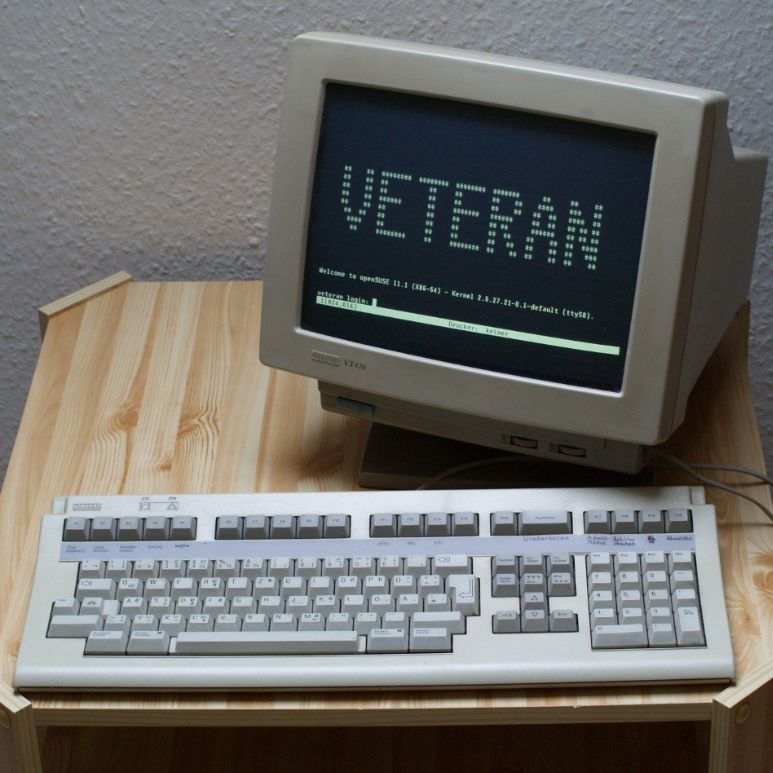
    A DEC VT420 terminal (1989). Photo by Jacek Rużyczka / CC BY-SA 3.0.

    I have been doing some renovations. Not on the house, but here on the site.

    For a long time, this blog lived in a rented room. I used EasyWP from Namecheap. It was functional. It worked. But it felt like living in a hotel. You can sleep there, but you are not allowed to drill holes in the walls or change the locks.

    I decided it was time to move out. I have spent the last three days migrating everything to my own VPS (Virtual Private Server). It was surprisingly quick. I expected a week of headaches, but it has gone smoother than I thought.

    The Economics of Independence

    We are often told that convenience is worth paying for. Usually, I agree. But in the world of hosting, the markup for convenience is steep.

    My previous setup was a patchwork of services. I was paying £7.40 a month for the WordPress hosting. On top of that, I paid £5 a month for Mullvad VPN to keep my browsing private. That is over £12 a month just to exist online securely.

    My new VPS costs £3.05 a month.

    For that price, I get more storage and traffic allowance than I will ever need. I have migrated the WordPress site. I have also set up WireGuard on the server. This replaces my Mullvad VPN subscription entirely.

    The maths is undeniable. I am saving nearly ten pounds a month, and I am getting more for it.

    The “Douglas Ireland” Cloud Stack

    The best part of this move is knowing exactly what is running under the bonnet. There is no “black box” anymore. I built the system, so I know how it works.

    Here is the current setup.

    1. The Foundation – I am using Hetzner Cloud based in Germany. It feels appropriate for a project focused on privacy to host the data within Europe. The OS is Ubuntu 24.04.3 LTS (Noble Numbat) running Linux Kernel 6.8.0. It is solid and stable.

    2. The Architecture – I went for a hybrid approach.

    • Host Level: Nginx runs natively. It handles the public traffic and manages the SSL certificates via Let’s Encrypt.
    • Container Level: Everything else runs in isolated Docker containers. They talk to each other through a custom internal bridge network.

    3. The Silence (Privacy & Ads) – This is the feature I am most pleased with.

    • VPN: I am running WireGuard (via the wg-easy image). It is faster and leaner than older protocols.
    • Ad Blocking: I have AdGuard Home running as a network-wide DNS sinkhole.
    • The Link: The VPN and AdGuard are linked internally. When I connect my phone or laptop to the VPN, all the DNS queries are forced through AdGuard. It scrubs the ads and trackers before the data even reaches my screen.

    4. The Applications

    • The Blog: douglasireland.com is running on a native Nginx/PHP implementation.
    • Coming Soon: I am looking to implement my own cloud storage and password manager next. That will save me even more money in the long run, but for now, I am taking it one step at a time.

    5. Maintenance – I don’t want to spend my life running updates manually. I have Watchtower running in the background. It checks for Docker image updates every 24 hours and applies them automatically.

    Escaping the Walled Garden

    Managed hosting is a walled garden. They keep it tidy for you, but they also lock the gates.

    They block certain plugins. They restrict file access. On a VPS, I have “root access.” That means I hold the keys to the entire building.

    If I want to run a Python script alongside this blog? I can. If I want to host my own password manager later down the line? I can. If I want to mess up the configuration and break the whole thing? I can do that too.

    That risk is part of the appeal.

    The Joy of Logic

    There is a satisfaction in getting a system to run perfectly. It is the same feeling you get when you finally crack a difficult crossword clue or fit the last piece of a puzzle into place.

    Setting this up required reading, learning, and typing commands into a terminal window. It gave me something to do. I am genuinely enjoying learning about how the internet actually functions.

    When I get a new service running, like the WireGuard VPN which now shields all my devices rather than just the five Mullvad allowed, I feel a real sense of accomplishment.

    Mid 90s Style Independence

    Ultimately, this is a philosophical choice.

    We have drifted into an era where we rent everything from Big Tech. We trade our data for ease of use. Moving to a VPS is a small act of rebellion. It is about data sovereignty. I control the backups. I control the logs. I am not relying on an ecosystem that might change its terms of service tomorrow.

    It feels like the internet of the mid 90s. It is a bit rougher around the edges, perhaps. But it is mine.

  • An Act of Digital Citizenship: Why I’m Still Donating to Wikipedia

    The email arrived today, right on schedule. It was from the Wikimedia Foundation, kindly reminding me that I had donated £5 last year and asking if I would consider renewing my support.
    My gut reaction was to hesitate. Do I actually use Wikipedia that much? The answer is no.


    My habits have changed. Like many people, when I want to know something now, I don’t open a new tab and type “wikipedia.org”. I open a chat with an AI. I ask my question in plain language and get a synthesized, conversational answer in seconds. It’s an incredible technology that has seamlessly integrated itself into my workflow.
    So, why donate to the encyclopedia I seem to have replaced?


    I was about to archive the email when I stopped and thought about the process more deeply. Where does this helpful AI get its information? How does it know the history of Paisley, the principles of thermodynamics, or the discography of my favourite band?
    Of course, it learns from a vast corpus of data scraped from the internet. A massive, foundational pillar of that data is Wikipedia. It’s perhaps the most significant single source of structured human knowledge online.


    That’s when it clicked. Wikipedia is no longer just a website I visit. It has become a fundamental piece of our shared digital commons.
    It’s like Barshaw Park for the internet.

    Barshaw Park: the Peace Garden” by Lairich Rig is licensed under CC BY-SA 2.0.

    It’s a vast, open space, built and tended to by a global community of volunteers. It is free for everyone to enter. It doesn’t plaster its beautiful landscapes with ads or charge an entry fee. Its purpose isn’t to make a profit, but simply to exist for the public good.


    My AI is like a fantastic personal tour guide. I can ask it anything about the park’s history or features, and it will instantly give me a brilliant, summarised tour. But that guide doesn’t build the paths, tend the gardens, or pick up the litter. The community does that.


    And like any public space, if it is neglected, it will fall into disrepair. The paths will crack, the gardens will become overgrown, and misinformation will spread like graffiti. If the commons degrades, the quality of every service that relies on it, including the AI I now find so useful, degrades too.


    That’s why I went back to that email and renewed my £5 donation.
    I don’t see it as paying for a product I no longer use. I see it as an act of digital citizenship. I’m chipping in for the park’s upkeep. It’s a tiny contribution to help maintain this incredible non-commercial, human-curated resource in an online world that is becoming more automated and commercialised by the day.


    By supporting Wikipedia, we are all helping to ensure that a neutral, verifiable source of knowledge remains healthy. We are funding the digital gardeners. We’re ensuring this public park remains a vital counterbalance to the noise and potential biases of the wider web.


    So, while I may ask an AI for my facts these days, I know that my donation helps ensure the park my ‘tour guide’ relies on remains a beautiful, trustworthy, and essential place for all of us. It’s a small investment in the health of the internet itself.


    If you also believe in that mission, perhaps you’ll consider joining me. Donate to Wikipedia here