Tag: politics

  • Thank You, Ward 27: The Safety Net and the Spider Web

    Soundtrack to this post.

    I have been out of hospital for three days now. The silence of my own bedroom is still a bit jarring after weeks of beeping monitors, rattling drug trolleys, and the constant theatre of the ward.
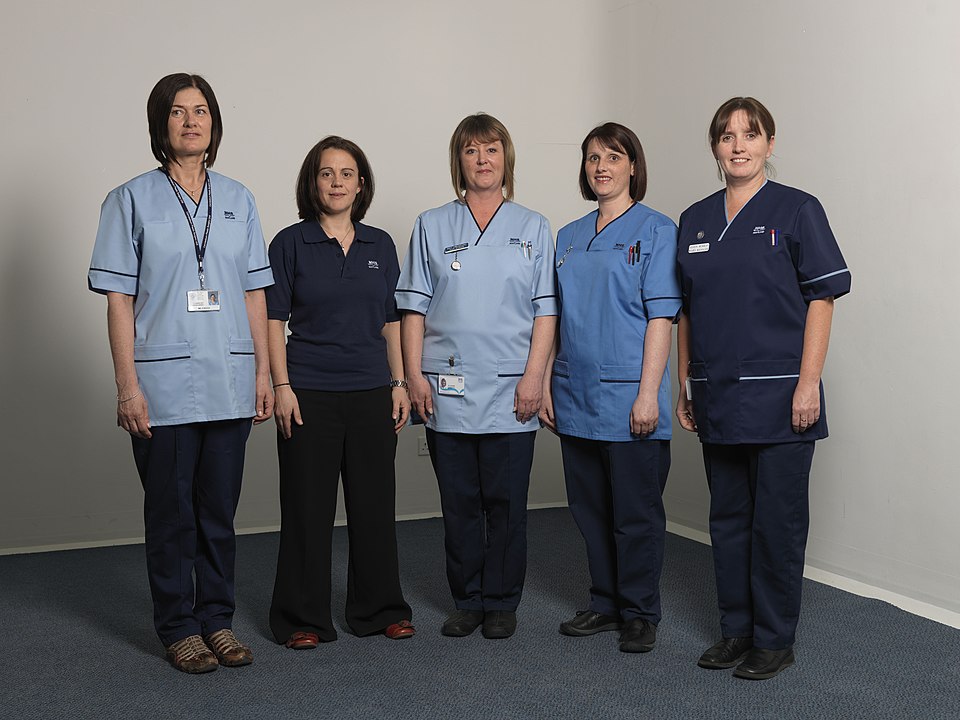
    Five NHS Scotland healthcare workers standing in a row against a white background, wearing various blue and navy uniforms representing different clinical roles.
    The backbone of the service. It is the staff, not the system, that holds everything together. Image by the Scottish Government. Licensed under CC BY 2.0.

    First, I need to say it: the staff on Ward 27 were marvellous. From the consultants to the cleaners, they are the glue holding a fraying system together. They treated me with dignity, humour, and skill. They saved my life.

    But now that I am out, I can say something else: the system they work in is breaking.

    I was part of the problem. For three weeks, I occupied a bed that could have gone to an emergency admission. Why? Because my consultant knew that if he discharged me and requested my scans as an “outpatient,” I would be waiting months. By keeping me in the bed, he could order them as an “inpatient” and get them done in days.

    It was a brilliant workaround for me, but a disaster for the NHS efficiency stats. I was essentially “bed blocking” my own recovery just to navigate the bureaucracy.

    And looking around the ward, I realised I wasn’t the only one there because of a systemic failure.

    It seemed to me that a huge number of patients were there not because of bad luck, but because of what we clinically call “lifestyle factors” and what we should politically call “despair.”

    The data backs this up. In Scotland, we see nearly 30,000 hospital admissions a year purely due to alcohol. Drug-related hospital stays are rising again too, with over 11,000 cases in the last year alone.

    The NHS is currently functioning as the emergency room for a society that is failing its citizens long before they reach the hospital doors. We are treating liver failure in Ward 27 because we didn’t treat the alcoholism in the community ten years ago. We are treating malnutrition and obesity because healthy food is expensive and addiction is a salve for poverty.

    We cannot “fix” the NHS just by throwing money at hospitals. That is like trying to fix a leaking roof by buying more buckets. We have to fix the roof.

    If we want to protect the NHS, we have to talk about:

    1. True Preventative Care: We need to stop treating addiction as a crime and start treating it as a health crisis before the ambulance is called.
    2. Social Care Integration: We need a social care system that actually works, so patients don’t have to stay in hospital simply because there is no one to look after them at home.
    3. Honest Triage: We need a system where a consultant doesn’t have to game the system and block a bed just to get a patient an MRI scan.

    The NHS is the greatest achievement of our society. It is the only reason I am here to write this. But if we want it to survive the vultures who are circling, we have to stop using it as a sticking plaster for broken social policy.

  • The Vultures Circle: Defending the NHS from the Tech Bros

    Soundtrack to this post.

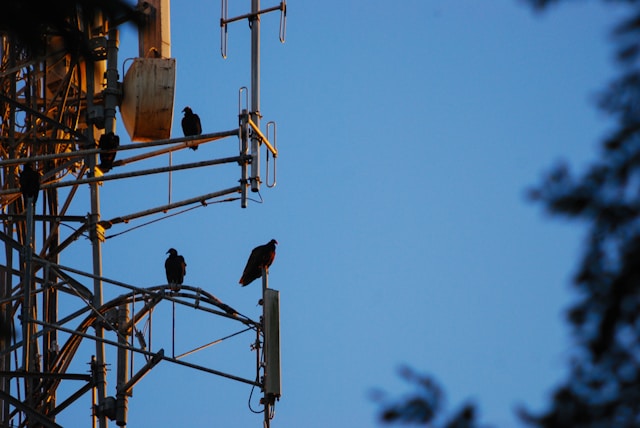
    The vultures are circling our infrastructure, both physical and digital. Photo by Sam Cherone on Unsplash.

    I am writing this from a hospital bed in Paisley. For over two weeks, I have been a guest of the state. My treatment, my meals, and my recovery are being powered by a system built on a simple, radical principle: that human life has an intrinsic value which cannot be calculated on a balance sheet.

    The NHS is the closest thing we have to a sacred institution. It is socialism in practice. And because of that, it is hated by the most powerful people on Earth.

    Across the Atlantic, Donald Trump is back in power, emboldened by a coterie of Silicon Valley “tech bros” and venture capitalists. These are men who view the state not as a protector, but as an obstacle. To them, the NHS is not a triumph of civilisation; it is an “inefficiency” waiting to be disrupted. It is a market they haven’t been allowed to corner yet.

    Make no mistake, they are coming for it.

    This is not a conspiracy theory. We have the receipts. Donald Trump has previously stated on camera that in any trade deal with the UK, “everything is on the table,” including the NHS. His trade negotiators have consistently pushed for “full market access,” which is diplomatic code for dismantling the price controls that stop US pharmaceutical giants from charging us American prices for life saving drugs. They want to break the NHS model because it is bad for their shareholders.

    And the tech invasion has already begun. Look at Peter Thiel, the billionaire co-founder of Palantir and a vocal Trump supporter. He has described the British public’s affection for the NHS as “Stockholm Syndrome” and claimed the system “makes people sick.” Yet despite his contempt for the institution, his company was awarded a massive contract to run the “Federated Data Platform” for the NHS in England. They are not waiting at the gates anymore. They are already inside the server room.

    The danger isn’t just that they want to sell us insurance. It is that they want to mine us for data. To the tech oligarchs backing the US administration, the NHS is just a massive, unexploited database. They see millions of health records, genetic profiles, and histories that they can feed into their proprietary AI models to generate profit.

    They want to turn patients into products.

    This is where my physical reality here on the ward meets my digital reality on the server.

    I have spent the last few months aggressively moving my digital life onto my own VPS. It is a modest setup: 8GB of RAM, an 80GB SSD, and a 1TB storage box. But it is mine.

    When I run my own cloud, I am removing myself from the jurisdiction of the Silicon Valley data brokers. I am refusing to let Google or Microsoft scrape my emails, track my location, or feed my photos into their algorithms. I am reclaiming my digital sovereignty from the very same people who are eyeing up the NHS for parts.

    There is an ideological line between defending socialised healthcare and self-hosting your data. Both are acts of resistance against a worldview that says everything, your health, your memories, your location, your blood, must be for sale.

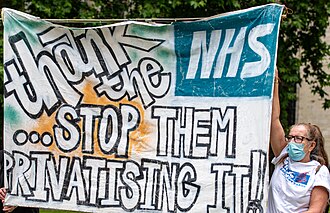
    A protester wearing a face mask holds up a large hand-painted banner outside the UK Parliament. The banner reads "Thank the NHS... STOP THEM PRIVATISING IT!" in large black and white lettering.
    A reminder that the fight for the NHS is happening on the streets as well as in the wards. Image by Alan Shearman. Licensed under CC BY 2.0.

    The Counter-Offensive

    It is easy to feel helpless when you are up against billionaires and governments, but resignation is just another form of privatisation. If we want to keep the vultures away, we have to make ourselves indigestible. Here is where we start:

    1. Lock the Gate: In England, you can click a button to opt out. In Scotland, they have made it harder. The easy “SPIRE” opt-out system was closed in 2023. But you still have rights. You have the “Right to Object” to your data being processed for research and planning under data protection law. It isn’t a simple form anymore; you have to write directly to your GP Practice Manager and explicitly state that you object to your data being shared for purposes other than direct care. It is a hassle, but that is the point. Make them work for it.
    2. Join the Frontline: Campaign groups like We Own It and Keep Our NHS Public are fighting the stealth privatisation of the service. They need members, they need money, and they need voices. Join them.
    3. Support the Staff: When nurses and junior doctors strike, they are not just fighting for pay; they are fighting for the safety of the service. Support them on the picket lines. A well-funded workforce is the best defence against a private buyout.
    4. Reclaim Your Digital Self: You might not be able to build a server in a hospital bed like me, but you can take small steps. Switch to privacy-focused browsers. Use Signal instead of WhatsApp. Every byte of data you deny Big Tech is a small victory for sovereignty.

    The Line in the Sand

    The tech bros want a world where you rent your digital existence from them, and where your healthcare is determined by your credit score. They want us to be serfs in a digital company town.

    I refuse.

    I will defend the NHS because it treats me as a human being, not a customer. And I will keep maintaining my little server because it treats me as an owner, not a user.

    The vultures are circling, both in Westminster and Washington. Keeping them away from our hospitals and our hard drives is the most important fight we have.

    Don’t let the bureaucracy stop you from locking the gate. I have prepared a sample letter for Scottish patients to exercise their Right to Object. Click here to view it.

  • The Smaller Voice Beside the Giant

    There’s a pattern I keep noticing.

    Canada lives beside the United States, quietly distinct but always affected by what happens next door. Scotland has a similar relationship with England. Different places, different histories. But the same feeling of being caught in something bigger.

    Neither country is fully in control of its own path. Both are tied to neighbours with more power, more say, more noise. And lately, that imbalance has been hard to ignore.

    Donald Trump is back in the White House. One of his latest ideas? That Canada could become the 51st state of the USA. He even referred to Justin Trudeau as “Governor of the Great State of Canada.” It was said with a smile, but the message was serious. Either pay up for America’s missile defence plan, or join the club and get it free.

    Canadians were rightly furious. It was patronising, absurd, and just a little bit threatening. Not a conversation between equals. More like a landlord offering you a deal you can’t really refuse.

    It made me think about Scotland. No one’s offering to make us the 51st anything, but the decisions still come from somewhere else. Brexit, for one. We voted to stay, but we were taken out anyway. Year after year, we get governments we didn’t vote for, policies we don’t support, and lectures about how lucky we are.

    It’s not that we hate our neighbours. It’s not about flags or slogans. It’s just the basic idea that decisions about our lives should be made by people who live here too.

    Canada pushes back with diplomacy and dignity. Scotland keeps turning up to the ballot box, keeps asking for the same thing. The answer is always not yet, not now, maybe never.

    It wears you down.
    But still, we keep asking.