Tag: Privacy

  • The Vultures Circle: Defending the NHS from the Tech Bros

    Soundtrack to this post.
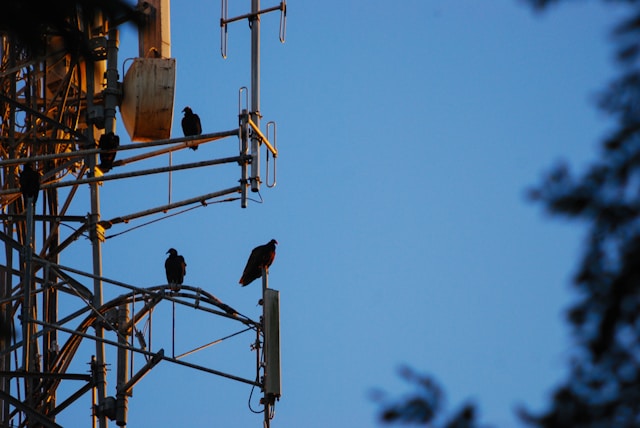
    The vultures are circling our infrastructure, both physical and digital. Photo by Sam Cherone on Unsplash.

    I am writing this from a hospital bed in Paisley. For over two weeks, I have been a guest of the state. My treatment, my meals, and my recovery are being powered by a system built on a simple, radical principle: that human life has an intrinsic value which cannot be calculated on a balance sheet.

    The NHS is the closest thing we have to a sacred institution. It is socialism in practice. And because of that, it is hated by the most powerful people on Earth.

    Across the Atlantic, Donald Trump is back in power, emboldened by a coterie of Silicon Valley “tech bros” and venture capitalists. These are men who view the state not as a protector, but as an obstacle. To them, the NHS is not a triumph of civilisation; it is an “inefficiency” waiting to be disrupted. It is a market they haven’t been allowed to corner yet.

    Make no mistake, they are coming for it.

    This is not a conspiracy theory. We have the receipts. Donald Trump has previously stated on camera that in any trade deal with the UK, “everything is on the table,” including the NHS. His trade negotiators have consistently pushed for “full market access,” which is diplomatic code for dismantling the price controls that stop US pharmaceutical giants from charging us American prices for life saving drugs. They want to break the NHS model because it is bad for their shareholders.

    And the tech invasion has already begun. Look at Peter Thiel, the billionaire co-founder of Palantir and a vocal Trump supporter. He has described the British public’s affection for the NHS as “Stockholm Syndrome” and claimed the system “makes people sick.” Yet despite his contempt for the institution, his company was awarded a massive contract to run the “Federated Data Platform” for the NHS in England. They are not waiting at the gates anymore. They are already inside the server room.

    The danger isn’t just that they want to sell us insurance. It is that they want to mine us for data. To the tech oligarchs backing the US administration, the NHS is just a massive, unexploited database. They see millions of health records, genetic profiles, and histories that they can feed into their proprietary AI models to generate profit.

    They want to turn patients into products.

    This is where my physical reality here on the ward meets my digital reality on the server.

    I have spent the last few months aggressively moving my digital life onto my own VPS. It is a modest setup: 8GB of RAM, an 80GB SSD, and a 1TB storage box. But it is mine.

    When I run my own cloud, I am removing myself from the jurisdiction of the Silicon Valley data brokers. I am refusing to let Google or Microsoft scrape my emails, track my location, or feed my photos into their algorithms. I am reclaiming my digital sovereignty from the very same people who are eyeing up the NHS for parts.

    There is an ideological line between defending socialised healthcare and self-hosting your data. Both are acts of resistance against a worldview that says everything, your health, your memories, your location, your blood, must be for sale.
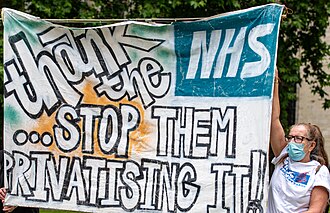
    A protester wearing a face mask holds up a large hand-painted banner outside the UK Parliament. The banner reads "Thank the NHS... STOP THEM PRIVATISING IT!" in large black and white lettering.
    A reminder that the fight for the NHS is happening on the streets as well as in the wards. Image by Alan Shearman. Licensed under CC BY 2.0.

    The Counter-Offensive

    It is easy to feel helpless when you are up against billionaires and governments, but resignation is just another form of privatisation. If we want to keep the vultures away, we have to make ourselves indigestible. Here is where we start:

    1. Lock the Gate: In England, you can click a button to opt out. In Scotland, they have made it harder. The easy “SPIRE” opt-out system was closed in 2023. But you still have rights. You have the “Right to Object” to your data being processed for research and planning under data protection law. It isn’t a simple form anymore; you have to write directly to your GP Practice Manager and explicitly state that you object to your data being shared for purposes other than direct care. It is a hassle, but that is the point. Make them work for it.
    2. Join the Frontline: Campaign groups like We Own It and Keep Our NHS Public are fighting the stealth privatisation of the service. They need members, they need money, and they need voices. Join them.
    3. Support the Staff: When nurses and junior doctors strike, they are not just fighting for pay; they are fighting for the safety of the service. Support them on the picket lines. A well-funded workforce is the best defence against a private buyout.
    4. Reclaim Your Digital Self: You might not be able to build a server in a hospital bed like me, but you can take small steps. Switch to privacy-focused browsers. Use Signal instead of WhatsApp. Every byte of data you deny Big Tech is a small victory for sovereignty.

    The Line in the Sand

    The tech bros want a world where you rent your digital existence from them, and where your healthcare is determined by your credit score. They want us to be serfs in a digital company town.

    I refuse.

    I will defend the NHS because it treats me as a human being, not a customer. And I will keep maintaining my little server because it treats me as an owner, not a user.

    The vultures are circling, both in Westminster and Washington. Keeping them away from our hospitals and our hard drives is the most important fight we have.

    Don’t let the bureaucracy stop you from locking the gate. I have prepared a sample letter for Scottish patients to exercise their Right to Object. Click here to view it.
  • Fugitives in the Pasta Aisle: The Extreme Measures Needed to Protect Your Privacy

    Soundtrack to this post.

    Last month, I wrote about evicting “Big Data” from my digital life. I migrated my entire digital ecosystem onto my own server. It went far beyond simple file storage; I now host my own search engine, media streaming, location tracking, and full personal cloud, reclaiming my digital sovereignty from the likes of Google and Microsoft. It was a technical challenge, but it was a battle I could win. If you own the hardware, you own the rules.

    Stuck in a hospital bed, I have been researching how to apply that same logic to my weekly shop. This is not just an intellectual exercise. When I am discharged, I will be unable to drive for several months. My usual freedom to choose where I spend my money will be gone, shrinking my world down to walking distance. That leaves me with exactly one option: the Tesco just down the road. I would not normally choose them, but geography has made me a captive audience. Hoping to reclaim some agency, I thought I could code a solution from here, but I found the reality is far less forgiving.

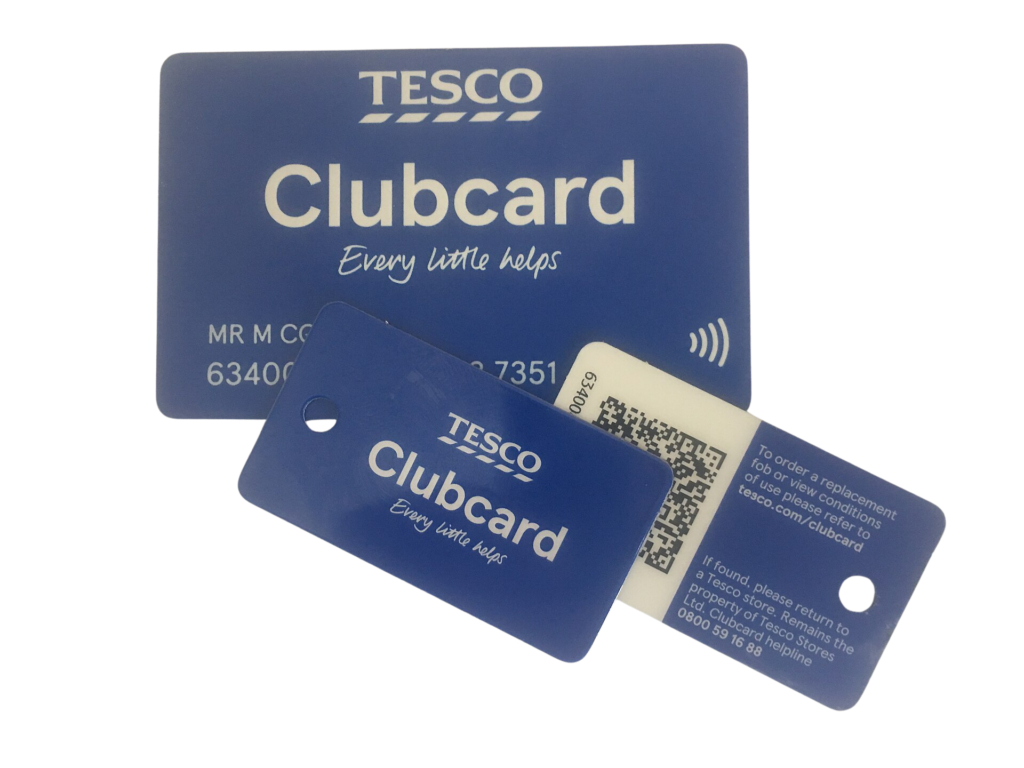
    The physical token of the data tax. To access the standard price, you must carry the tracker. – “The Tesco Clubcard containing contactless technology, and the keyfobs” by Marccoton, licensed under CC BY-SA 4.0.

    We are all familiar with the “Clubcard Price.” You walk down the aisle for coffee or olive oil and see two prices. The first is a reasonable £6.50. The second, for non-members, is a punitive £11.00. For years, we have been trained to view the lower price as a reward, a discount for loyalty. But let us be honest about what this really is. It is not a discount. It is a Data Tax. The £11.00 is a fine you pay for refusing to hand over your identity.

    I had a plan to circumvent this. Being a problem-solver, I thought about launching a service on this site: a “Communal Clubcard.” The idea was simple and socialist in nature. We would share communal cards, pooling our collective bargaining power to get the lower prices without giving Tesco our individual shopping histories. We would pollute their data stream with noise and reclaim the discount.

    It turns out, they are way ahead of me.

    I looked into the logistics, and the pitfalls are designed specifically to crush this kind of collective action. Tesco now uses “velocity checks” to detect if a card is used in Glasgow and London within the same hour, instantly locking the account. They have updated their scanners to reject screenshots of barcodes. They are phasing out physical cards in favour of apps that generate rotating, expiration-prone QR codes.

    They have not just made it difficult to share; they have engineered the system to ensure a one-to-one surveillance ratio. They do not just want a customer to buy the beans; they need to know that Douglas Ireland bought the beans, at what time, and what he bought alongside them.

    This brings me to a depressing realisation. I can self-host my email. I can self-host my photos. But I cannot self-host my groceries.

    In the digital world, open-source software like Nextcloud offers an escape hatch. If you have the skills and the patience, you can opt out of the surveillance economy. In the physical world, that escape hatch is being welded shut. The supermarkets have established a monopoly not just on food, but on the terms of exchange.

    There is a workaround, but it borders on spycraft. To avoid the tracking, I would need to set up a “burner” account with a fake name and a masked email address. Crucially, I would have to pay in cash every single time. If I were to slip up once and use my debit card, their systems could link that payment token to the burner account, retroactively tying every bag of pasta and pint of milk to my real identity.

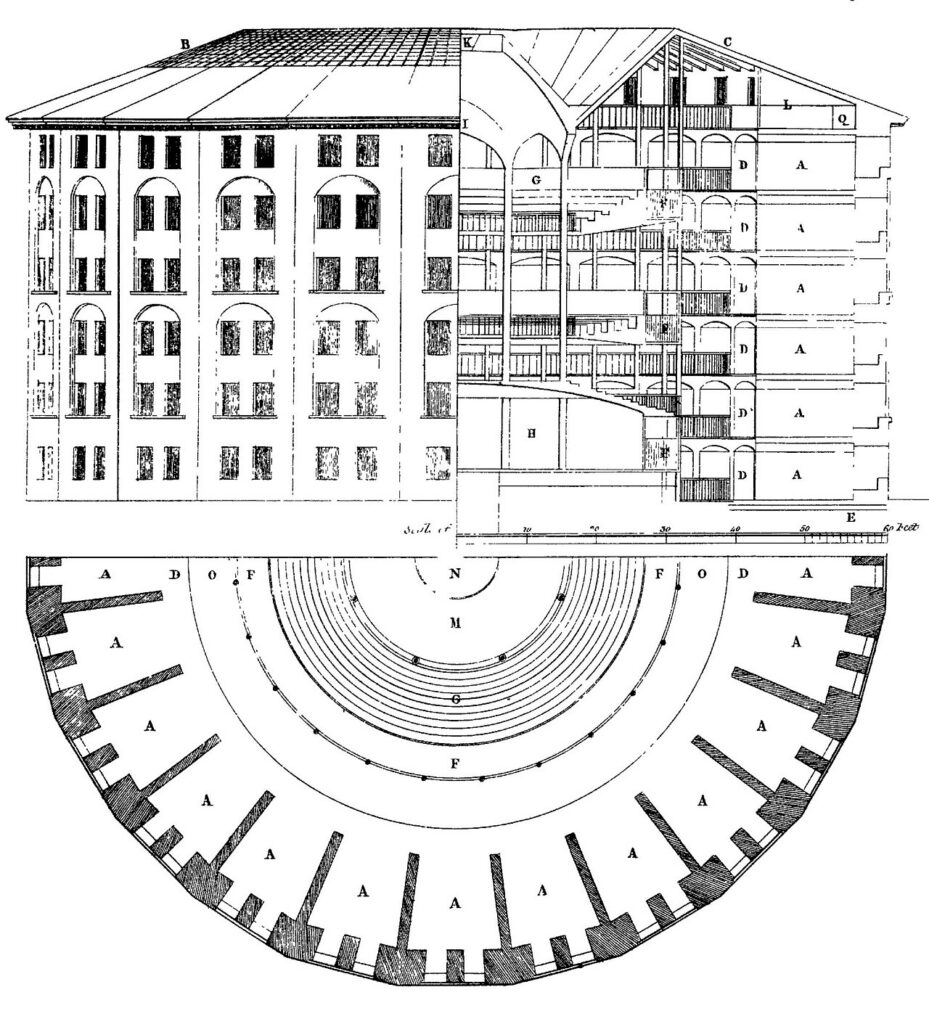
    Jeremy Bentham’s Panopticon (1791). A prison design where the inmates are constantly watched but cannot see the observer; the perfect metaphor for the modern supermarket aisle. – Plan of the Panopticon by Jeremy Bentham (1843), via Wikimedia Commons. Public Domain.

    Is this what privacy has become? A luxury good available only to those willing to act like fugitives in the pasta aisle?

    There is a profound inequality here. We often talk about the “poverty premium,” where being poor costs more (prepayment meters, high-interest loans). We are now seeing the emergence of a “privacy premium.” If you can afford to pay the non-member price, you get to keep your data. If you are struggling with the cost of living, you are forced to sell your privacy just to afford the basics.

    My attempt to build a communal alternative failed because the system is rigged against anonymity. But it was a useful failure. It highlighted that the fight for data sovereignty is not just about servers and code. It is about the right to exist in public spaces without being tracked, indexed, and profiled.

    I might have secured my digital home, but outside the front door, the company town is bigger than ever. And for now, it seems I have to choose between my principles and the price of olive oil.

    I am stuck paying the premium for now. If any readers have found a viable solution, I would be very interested to read about it below or on my Keep in Touch page.

  • Seizing the Means of Connection

    Soundtrack to this post.

    As we enter 2026, many of us are making the usual resolutions to spend less time on our screens or eat more healthily. My resolution is different. I am not trying to spend less time on the internet; I am trying to change how I inhabit it. I am moving “Big Data” out of my life and moving my digital existence onto my own Virtual Private Server (VPS).

    Image: Warded lock
    by Thegreenj
    via Wikimedia Commons, licensed under CC BY-SA 3.0. A threshold to a digital space that belongs to you, not a billionaire.

    This sounds like a technical project, but it is fundamentally a political one. For years, we have lived in digital company towns. We do not own the square where we speak; corporations do. We saw this reality on full display at the start of this year. Men like Elon Musk and Mark Zuckerberg were not just guests at Donald Trump’s second inauguration. They were right at the front, seated in positions of honour that were traditionally reserved for family and cabinet members. It was a clear signal of the increasingly close bond between political power and the billionaire owners of the digital platforms we use every day. We do not own our memories or our data; we merely rent space from them. We have become tenants on digital land that can be sold, gated off, or strip-mined for AI training data at a moment’s notice.

    Aaron Swartz spent his life fighting to liberate knowledge and he understood these power dynamics perfectly. He famously said that information is power. But he also knew that like all power, there are those who want to keep it for themselves.

    Right now, that power is concentrated in a few corporate boardrooms. They treat our data as a raw material to be extracted, which is a modern version of the old enclosures that fenced off the physical commons centuries ago. By self-hosting, we are rejecting this new feudalism. We are stating that our words and connections are not commodities to be monetised by billionaires.

    This is especially vital as we enter the era of AI. If AI is going to eliminate jobs, we have to ask what the new economy will actually look like. In a world where human labour is replaced by machine intelligence, data becomes the primary resource. It is the fuel that runs the entire system. The question of who controls that data is the question of who holds the power in a post-scarcity world.

    In his 1930 essay, “Economic Possibilities for Our Grandchildren,” John Maynard Keynes predicted that by 2030, technological progress would allow us to work only fifteen hours per week. He believed we would have solved the “economic problem” and would instead be grappling with how to spend our newfound leisure time. We are almost at that 2030 deadline, yet the fifteen-hour week feels further away than ever.

    Replacing work should be a good thing. Most people only work because they are paid to do so. But Keynes’s vision failed because the gains from productivity were not distributed; they were captured. If the data that powers the AI future stays in private hands, we will not get leisure. We will get a deeper kind of dependency. Reclaiming our data is the first step in ensuring that a world without work is a world of freedom, not just one of mass unemployment and corporate control.

    There is a misconception that data sovereignty is only for the technical elite. That is no longer the case. The tools to reclaim your data, such as the open-source platform Nextcloud, are now mature and accessible to anyone with a little curiosity. You do not need a computer science degree to stop being a product.

    Admittedly, it is a little less convenient. You have to manage your own backups and occasionally learn how a new piece of software works. However, that small amount of friction is worth the reward. It is the difference between buying a microwave meal and cooking from scratch. When you cook for yourself, you know exactly what is in the pot. You know where the ingredients came from, and you are no longer at the mercy of a corporation’s supply chain.

    You also get to eat in peace. When you host your own services, the advertising disappears. You are no longer being shouted at by brands or tracked by algorithms trying to sell you back a version of yourself. You gain a sense of resilience, a cleaner digital environment, and a deeper understanding of the tools you use every day.

    There is also a hidden environmental cost to the Big Tech model. Because their business relies on extracting and storing every possible scrap of our data to train AI, they have built an infrastructure that is staggeringly wasteful. These data centres consume vast amounts of power and water just to maintain the digital landfill they use for profit. Choosing to self-host is a way to reject that waste. It allows for a more conscious, lean way to live online. When you only host what you actually need, you are practising a form of digital conservation. It is a radical choice that proves “small is beautiful” applies just as much to our servers as it does to our communities.

    My resolution for 2026 is to stop being a digital tenant and become an owner. In a world where every part of our identity is for sale, keeping something for yourself is a revolutionary act.

    Oh, and I’m quitting vaping too, because one form of cloud hosting is probably enough for one year.