Tag: scotland

  • Let Scotland Go: A Kindness to Both Nations

    Well, this isn’t how I planned to spend my evening. I’m writing this from a hospital bed, thanks to a sudden issue with my right eye. It’s nothing serious, but it does mean I’m stuck here overnight. No access to my VPS terminal, no proper keyboard, just me, my thoughts, and a surprisingly comfortable NHS bed. And since I’ve got time to kill, I might as well write. Again.

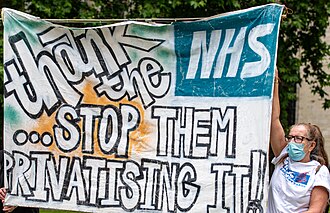
    First off, let’s talk about the NHS. It’s not perfect, but it’s a bloody marvel. Free at the point of use, staffed by people who actually care, and despite years of underfunding and mismanagement, still managing to keep people alive and relatively well. I’m grateful for it. We all should be. So, if you’re reading this and you’re English, remember that the next time someone tries to tell you Scotland’s better off without independence. The NHS is one of the best arguments for why the UK should work. But it’s also a reminder of how badly Westminster can mess things up when it wants to.

    Right, now that’s out of the way, let’s get to the point. Why should the English support Scottish independence? I’m English myself, by the way. Grew up near Manchester, moved to Scotland ten years ago. And I’ve always believed in independence for Scotland. Not because I don’t like being English, but because I think it’s the right thing to do. So, let’s break it down.

    Democracy Actually Working

    Scotland votes one way. England votes another. And yet, Scotland gets dragged along with whatever England wants. That’s not democracy, is it? It’s like being in a flat share where one person always picks the TV programme, even when everyone else wants to watch something different. At some point, you’ve got to ask why you’re even sharing a flat.

    Scottish independence isn’t about nationalism in the flag-waving, chest-thumping sense. It’s about having a government that actually reflects the people it serves. Scotland’s more left-leaning. It’s more progressive on social issues. It’s greener. And yet, it’s stuck with a Westminster government that doesn’t give a toss about any of that. So, if you’re English and you believe in democracy, you should support Scotland’s right to choose its own path.

    A Greener Future

    Scotland’s got ambitious climate targets. It’s investing in renewables like it’s going out of fashion (which, let’s be honest, fossil fuels should be). But Westminster’s dragging its feet. More runways, more roads, more North Sea oil. It’s like trying to run a marathon with someone tying your shoelaces together.

    An independent Scotland could set its own environmental policies. It could push harder for wind, wave, and tidal energy. It could show the rest of the UK what a proper green transition looks like. And if you’re English and you care about the planet, wouldn’t you want that?

    Brexit (Yes, Still)

    Let’s not pretend Brexit’s going well. It’s not. Scotland voted to stay in the EU. It got dragged out anyway. And now it’s stuck with the economic fallout, the trade barriers, the whole mess. Independence would give Scotland the chance to rejoin the EU. To rebuild those trade links. To be part of a bigger, cooperative project again.

    If you’re English and you’re still clinging to the idea that Brexit was a good thing, fine. But if you’re one of the many who’ve spent the last few years watching in horror as the economy tanks and the government flails, why wouldn’t you want Scotland to have a way out?

    A Left-Wing Alternative

    Scotland’s politics are different. The SNP’s not perfect, but it’s miles ahead of Westminster on social issues, welfare, and public services. Labour’s resurgence in England? Great. But Scotland’s already got a left-leaning government. It’s just being held back by Westminster.

    An independent Scotland could be a proper left-wing alternative. It could show that another way is possible. Higher taxes for the rich, proper investment in public services, a real commitment to reducing inequality. If you’re English and you’re sick of the same old Westminster politics, wouldn’t you want to see that happen?

    It’s Not About Separation, It’s About Choice

    This is the big one. Supporting Scottish independence isn’t about wanting to break up the UK for the sake of it. It’s about recognising that Scotland should have the choice. That it should be able to decide its own future. And if you believe in self-determination, in the right of people to govern themselves, then you should support that.

    And here’s the thing: it’s not like Scotland and England would become enemies. We’d still be neighbours. We’d still trade, still cooperate, still share a history. But Scotland would finally have the chance to build the kind of country it wants to be.

    So, What Now?

    If you’re English and you’re reading this, think about it. Scottish independence isn’t a threat. It’s an opportunity. For Scotland, yes, but for England too. It’s a chance to rethink what the UK is, what it could be. To move away from this centralised, London-dominated mess and towards something better.

    And if you’re Scottish? Well, keep pushing. Keep making the case. Because independence isn’t just about nationalism. It’s about building a fairer, greener, more democratic country. And who wouldn’t want that?

    (Now, if you’ll excuse me, I’ve got to try and get some sleep in this very bright, very noisy hospital ward.)

  • Trump’s Donroe Doctrine: A Wake-Up Call for Scotland and the Left


    The world is sliding back into an era where “might makes right,” and Donald Trump’s so-called “Donroe Doctrine” is the latest proof. This policy, which effectively declares the Western Hemisphere as America’s backyard, isn’t just a threat to Latin America. It’s a wake-up call for Europe, the left, and, most importantly, for Scotland. If we’ve learned anything from the past week, it’s that relying on NATO for security is a gamble we can’t afford to take.

    The Venezuela Precedent: Imperialism in Action

    The US attack on Venezuela and the capture of President Nicolás Maduro was as predictable as it was illegal. Trump has spent the past year signalling his intent, and his National Security Strategy made it clear that he sees the Western Hemisphere as America’s sphere of influence. No international laws, no treaties, no alliances will stand in his way. The message is simple: if the US wants something, it will take it.

    What’s shocking isn’t just the blatant disregard for international law. It’s Europe’s response, or lack thereof. European leaders, who have spent years rallying support for Ukraine on the grounds of territorial integrity, are now stuck between condemning the US or backing its actions. Most have chosen to do neither, offering only weak, non-committal statements. Sir Keir Starmer’s response was particularly spineless, proving once again that when it comes to standing up to US imperialism, Europe lacks the backbone.

    The Venezuelan opposition leader, María Corina Machado, praised the US action, calling it a “huge step for humanity.” But let’s be clear: this wasn’t about justice or human rights. It was about control. Venezuela has the world’s largest proven crude oil reserves, and Trump’s administration has made no secret of its desire to secure those resources. This is classic resource colonialism, dressed up in the language of democracy and security.

    Greenland: The Next Target

    For Scotland, this should be a warning. If Trump is willing to invade Venezuela for its oil, what’s to stop him from turning his gaze to Greenland? The US president has made no secret of his desire to annex Greenland from Denmark, another NATO ally. And if he’s willing to use force, as he has in Venezuela, then Europe is facing a crisis of its own making.

    The problem is simple: Europe lacks hard power. It’s a continent that has spent decades relying on the US for security, only to find itself at the mercy of a president who treats international law like an inconvenience. If Trump takes Greenland by force (and make no mistake, he could), then NATO is finished. And if NATO collapses, Europe’s security unravels with it.

    Denmark’s Prime Minister, Mette Frederiksen, has warned that any US attack on a NATO ally would be the end of “everything.” Greenland’s Prime Minister, Jens-Frederik Nielsen, has urged Trump to give up his “fantasies about annexation.” But words alone won’t stop Trump. If he’s serious about Greenland (and all signs suggest he is), then Europe needs a plan. And so does Scotland.

    Scotland’s Dilemma: Independence or Complicity?

    This isn’t just about security: it’s about sovereignty. If Denmark can’t count on NATO to protect Greenland, what hope is there for Scotland? The truth is, we’re better off charting our own course. Independence isn’t just about self-governance, it’s about self-defence. It’s about building a nation that stands on its own principles, not one that bends to the whims of an imperial power.

    The lesson from Trump’s Donroe Doctrine is clear: in a world where the strong do what they can and the weak suffer what they must, Scotland must build its own resilience. That means investing in renewable energy, strengthening democratic institutions, and forging alliances based on mutual respect—not imperialism.

    A Leftist and Green Perspective

    For the left, this is a moment to reject the false dichotomy of US imperialism versus European weakness. We need a third way: a politics of international solidarity, anti-colonialism, and environmental justice. Scotland, with its vast renewable energy potential, could be a leader in this movement. We could show the world that another way is possible; one that doesn’t rely on military alliances or resource wars.

    The Green perspective is equally clear. Trump’s aggression is driven by a desire for oil and minerals. The answer isn’t to compete in this race to the bottom. It’s to reject it entirely. Scotland could lead the way in building a green economy that doesn’t depend on the exploitation of other nations’ resources.

    The left and the Green movement must unite

    The world is changing, and not for the better. Trump’s aggression is a reminder that international law is only as strong as those who enforce it. For Scotland, the choice is simple: do we want to be part of a crumbling alliance, or do we want to stand on our own? The time to decide is now.

    The left and the Green movement must unite around a vision of independence that rejects both US imperialism and European complacency. We need a Scotland that is sovereign, sustainable, and socialist. Anything less is a betrayal of our principles and our future.

  • The Smaller Voice Beside the Giant

    There’s a pattern I keep noticing.

    Canada lives beside the United States, quietly distinct but always affected by what happens next door. Scotland has a similar relationship with England. Different places, different histories. But the same feeling of being caught in something bigger.

    Neither country is fully in control of its own path. Both are tied to neighbours with more power, more say, more noise. And lately, that imbalance has been hard to ignore.

    Donald Trump is back in the White House. One of his latest ideas? That Canada could become the 51st state of the USA. He even referred to Justin Trudeau as “Governor of the Great State of Canada.” It was said with a smile, but the message was serious. Either pay up for America’s missile defence plan, or join the club and get it free.

    Canadians were rightly furious. It was patronising, absurd, and just a little bit threatening. Not a conversation between equals. More like a landlord offering you a deal you can’t really refuse.

    It made me think about Scotland. No one’s offering to make us the 51st anything, but the decisions still come from somewhere else. Brexit, for one. We voted to stay, but we were taken out anyway. Year after year, we get governments we didn’t vote for, policies we don’t support, and lectures about how lucky we are.

    It’s not that we hate our neighbours. It’s not about flags or slogans. It’s just the basic idea that decisions about our lives should be made by people who live here too.

    Canada pushes back with diplomacy and dignity. Scotland keeps turning up to the ballot box, keeps asking for the same thing. The answer is always not yet, not now, maybe never.

    It wears you down.
    But still, we keep asking.